


The return of cult symbols
Andrey Erofeev
Looking at Osmolovsky's works, one would not guess that the artist came (or rather fled) from Moscow, where he, one of the most important figures of the Russian art scene, was declared a ‘foreign agent’ and subjected to a brutal search with the confiscation of his archives and art works.
The exhibited objects do not resemble what the audience usually associates with the concept of the ‘Russian art.’ There is nothing protest-like, revolutionary, or suprematist here. Osmolovsky's works suggest that the author's art evokes New York or London. The ingots, sparkling with a golden sheen, and the slices of cake or some other baked goods, enlarged to gigantic proportions, are reminiscent of common neo-pop art practices. They bring to mind Jeff Koons and Damien Hirst, with their trail of followers who profess uncritical adoration for the gadgets of the entertainment industry and simple pleasures. Moving in the vein of the forms and techniques of the second or even third generation of ‘found object’ artists—the only international trend that has survived in contemporary art—Osmolovsky acts like a beginner chess player entering the world of grand chess. He plays a canonical opening straight out of the textbook. Thus, he shields his objects as much as possible from the traces of his authorship. Everything is done by anonymous workers, usually using machine processing techniques. The objects themselves are enlarged or reduced copies of ‘found objects’ made long ago, by some unknown individuals and not for artistic purposes at all. These objects are not simply transferred from the everyday sphere to the realm of art. Their design has been reworked. Their dimensions and materials have been changed. They seem to have undergone a designer's treatment and now look less like copies of real objects and more like abstract sets. Their form and texture are close to ‘decorative art,’ those senselessly beautiful objects that are used to liven up offices, empty bookshelves in living rooms, or reception areas in restaurants and expensive hotels.
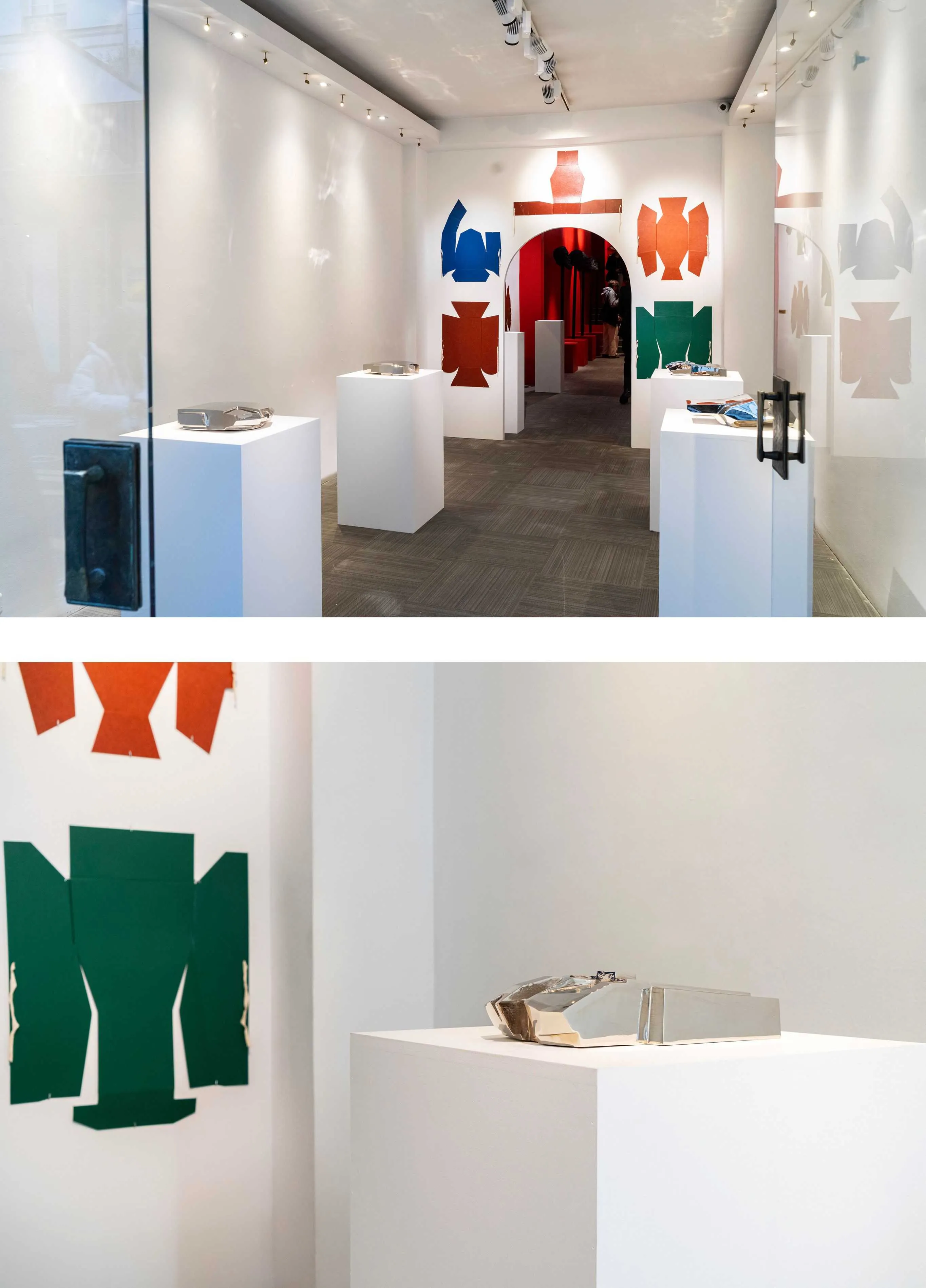
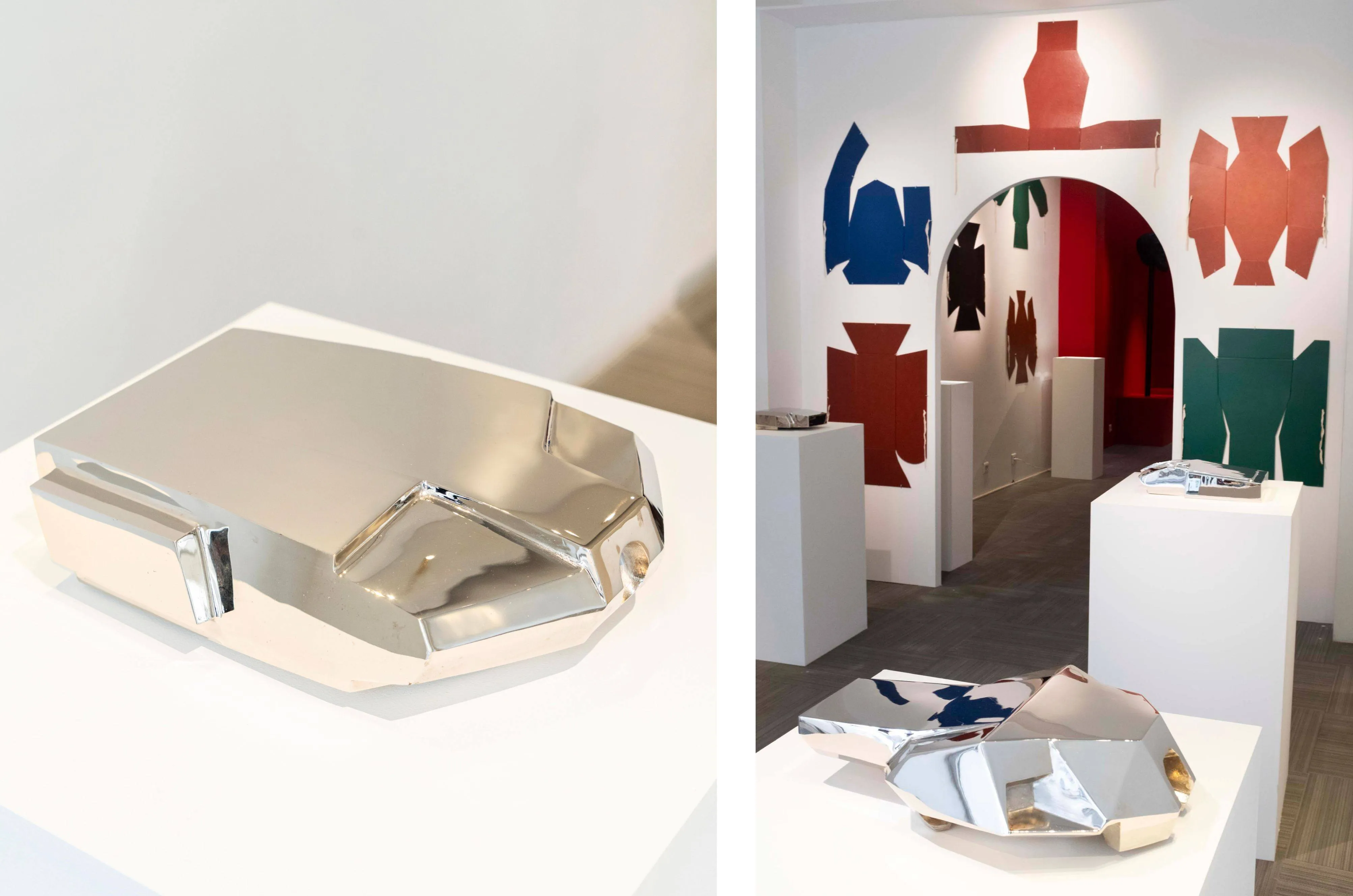
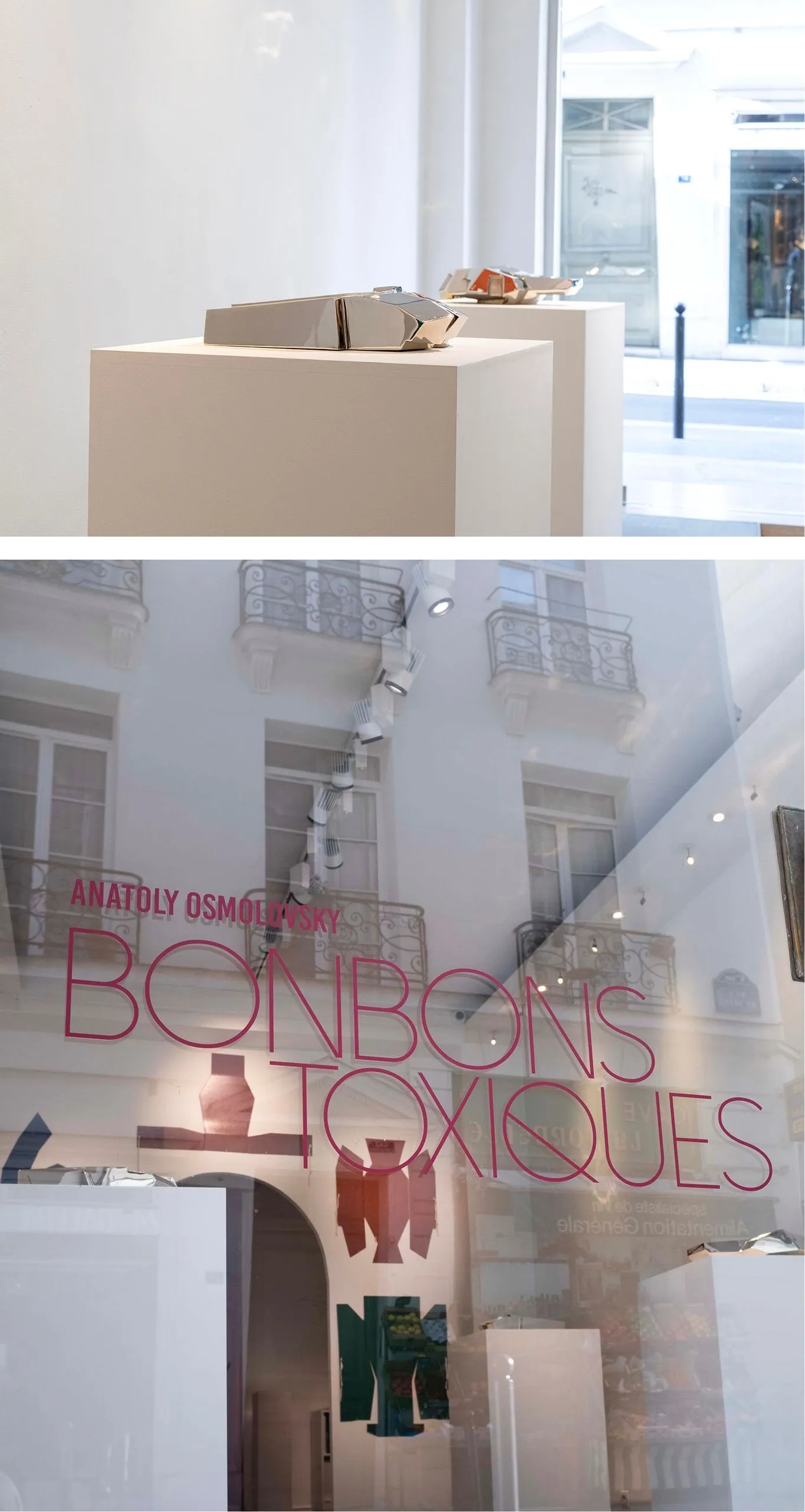
This is what Osmolovsky's ‘golden’ objects, which open this exhibition, look like. Polished to a shine and perfectly sanded, these bronzes have completely lost their recognisable connection to their natural prototypes. This break in the chain of visual associations is the original move, the Moscow artist’s innovation. He clearly wanted his objects to look like ordinary Western-style contemporary art gadgets, even some kind of by-products of creativity – reduced copies of minimalist sculptures.
Viewing Osmolovsky's works becomes interesting once the viewer learns what these ingots are modelled on. The artist has reproduced in miniature various versions and types of turrets that crown the hulls of modern tanks. The artist has stripped these turrets of their guns, machine guns and other military equipment, but has reproduced their overall shape precisely. This simplification has transformed the object. From a specific piece of military equipment, it has become a design idea for an object.
The older generation remembers that everyday design in the USSR and socialist countries was not particularly sophisticated. Things were poorly cut and sewn, remained unchanged for decades, and required constant repair. The communist world was a civilisation of “inconvenient everyday objects.” But the military market of this world lived by different rules. Here, the requirements for the functional quality of things increased a hundredfold. The plastic appearance, directly related to aerodynamics, attack reflection angles, ballistics and other combat factors, required maximum precision in decision-making. The plastic appearance, directly related to aerodynamics, attack reflection angles, ballistics and other combat factors, required maximum precision in decision-making.
Designers had to follow the aesthetic canons of the time. Competing with NATO weaponry, Soviet military equipment (which was generally less effective) had to look ultra-modern and even futuristic. Its appearance was constantly adapted to the changing tastes of technical fashion. Among the products of Soviet industry, tanks represented the pinnacle of perfection. That is why military parades were so popular in the USSR.
Nowadays, fewer people flock to parades, but a significant proportion of the population continues to admire the beauty and power of military equipment. They are proud of their tanks. Children learn about them almost from the cradle. On holidays, some parents dress their babies up as tankers and put them in prams that look like small tanks. Even students cannot escape tanks. Summer military camps include ‘tank training.’ I will never forget the clanking sound of the iron monster's caterpillar tracks as it covered the pitiful trench I had dug with its mighty mass, in which I was hiding with a training grenade in my hand. In general, tanks are familiar to everyone in Russia, probably no less so than tractors. They are almost commonplace and at the same time highly symbolic. Songs were written about tanks in Soviet times.
"Our armour is strong, and our tanks are fast,
And our people are full of courage,
Soviet tankers stand in formation –
Sons of their great Motherland.
Roaring with fire, gleaming with steel,
The machines will go on a furious march ...".
They will march, of course, to the West. In the imagination of Soviet and Russian society, the tank was and remains the main weapon in the military struggle with the Western world. When such a war broke out (and today in Russia, World War II is interpreted precisely as what the war between the USSR and the West was), the tank became a symbol of that war. Elevated on a granite or concrete pedestal, it became the most widespread iconographic symbol of Victory. Thousands of such monuments are scattered throughout cities and towns from Moscow to Berlin.
Today, the Soviet ideological basis for Russia's confrontation with the West has disappeared. But the desire to continue the conflict has flared up with renewed vigour. The confidence that political goals can be achieved by brutal force, that violence in relations between countries is productive and not punishable, has returned. Abandoned weapons depots have been reopened and hordes of tanks have moved into Ukraine.
It is clear that the revival of the cult of violence is not limited to Russia. This cult is professed by many ‘players’ on today's political scene. In other countries, it may be represented by different symbols. But for the Russian author, it was logical to choose the tank.
Thus, this seemingly decorative gadget is loaded with rich semantic baggage. By triggering the ‘Mandela effect,’ it awakens memories in the viewer (‘how we went with Dad to watch the parade on Red Square’), revives fears, and brings to mind Budapest, Prague, the Moscow coup of 1991 and the coup of 1993, when tanks fired directly at parliament, and even the burned Russian tank columns in Grozny and, more recently, near Kiev. However, all these flashes of meaning are not mandatory and are introduced by the viewers themselves. The main meaning of the object itself lies in denoting the cult of violence that has returned to our lives as one of the components of today's political culture. The ‘sacred’ quality of Osmolovsky's “towers” that emerges in the process of perception — as cult objects of worship of violence — brings to mind a similar effect in Jeff Koons' ‘Sacred Heart.’ For some, this heart symbol is just a key chain or a necklace pendant. For others, it is an ex voto and a gift of gratitude to the Virgin Mary or the burning heart of Christ. Osmolovsky deliberately avoids the emotional crescendo evoked by the powerful increase in scale, a favourite technique of Jeff Koons. But he uses methods similar to Koons's to treat his subject matter – mirror polishing, dust removal, the shine of precious metal. They emphasise the transcendent nature of the “spiritual” object.
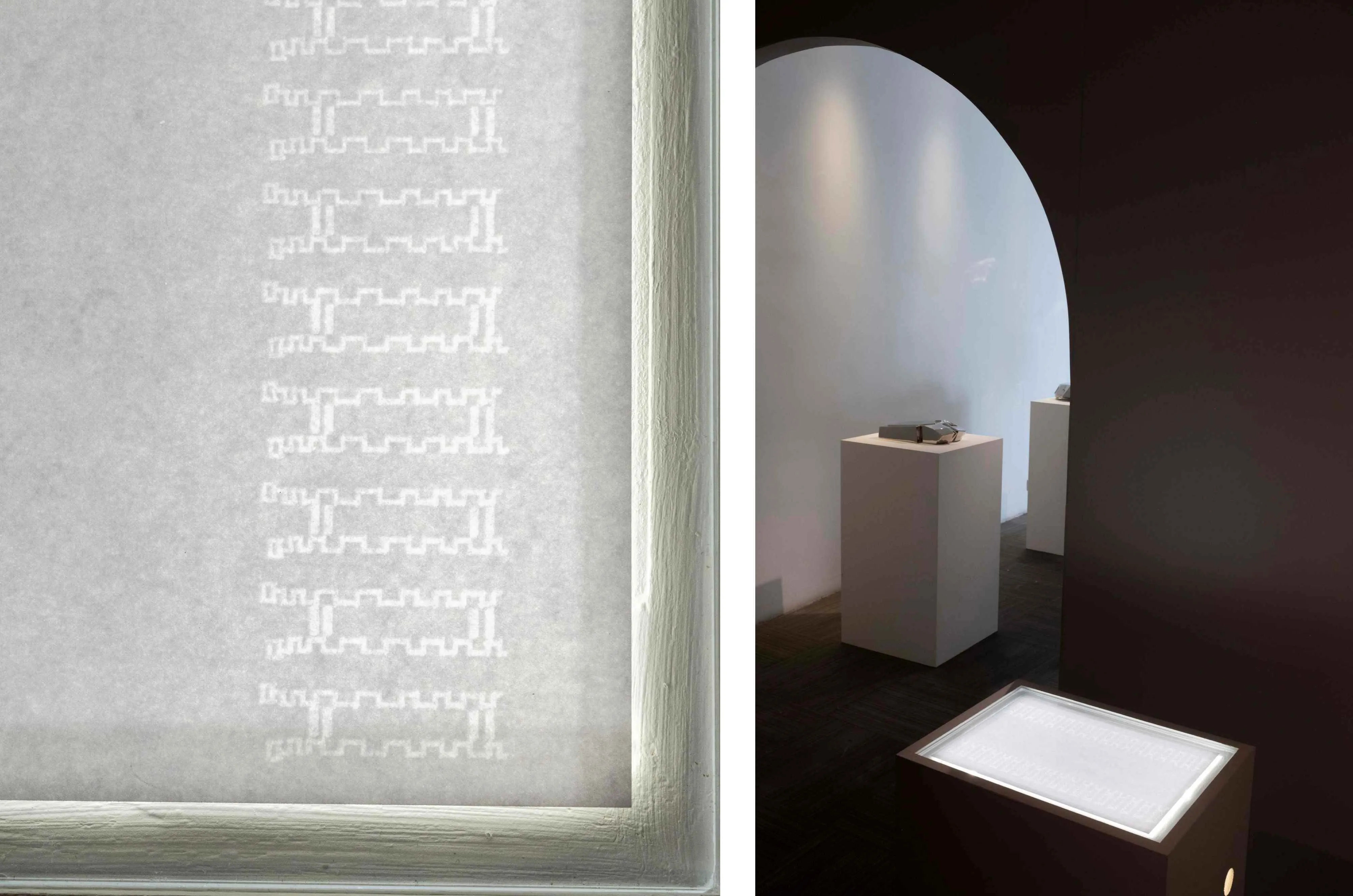
The semantics of the towers are continued by two other Osmolovsky’s series. The title of the first series, “Traces,” will make the curious viewer look closely at the blank sheets of white paper. But no matter how long you look at the blank sheet of paper lying on the table, you will see nothing. Only by lifting the paper to the light, i.e. by exposing it to the anaoid not provided for in the exhibition, one can notice the stripes of watermarks, reproducing the imprint of caterpillar tracks, which tanks leave on their way.
As Osmolovsky wrote mt, this work was made and exhibited when a hybrid war was waged in Donbass and the authorities denied that Russian military equipment had been fighting there. Osmolovsky engaged here in a discourse of non-spectacularity, which implies a discreet, modest statement uttered as if in whisper.
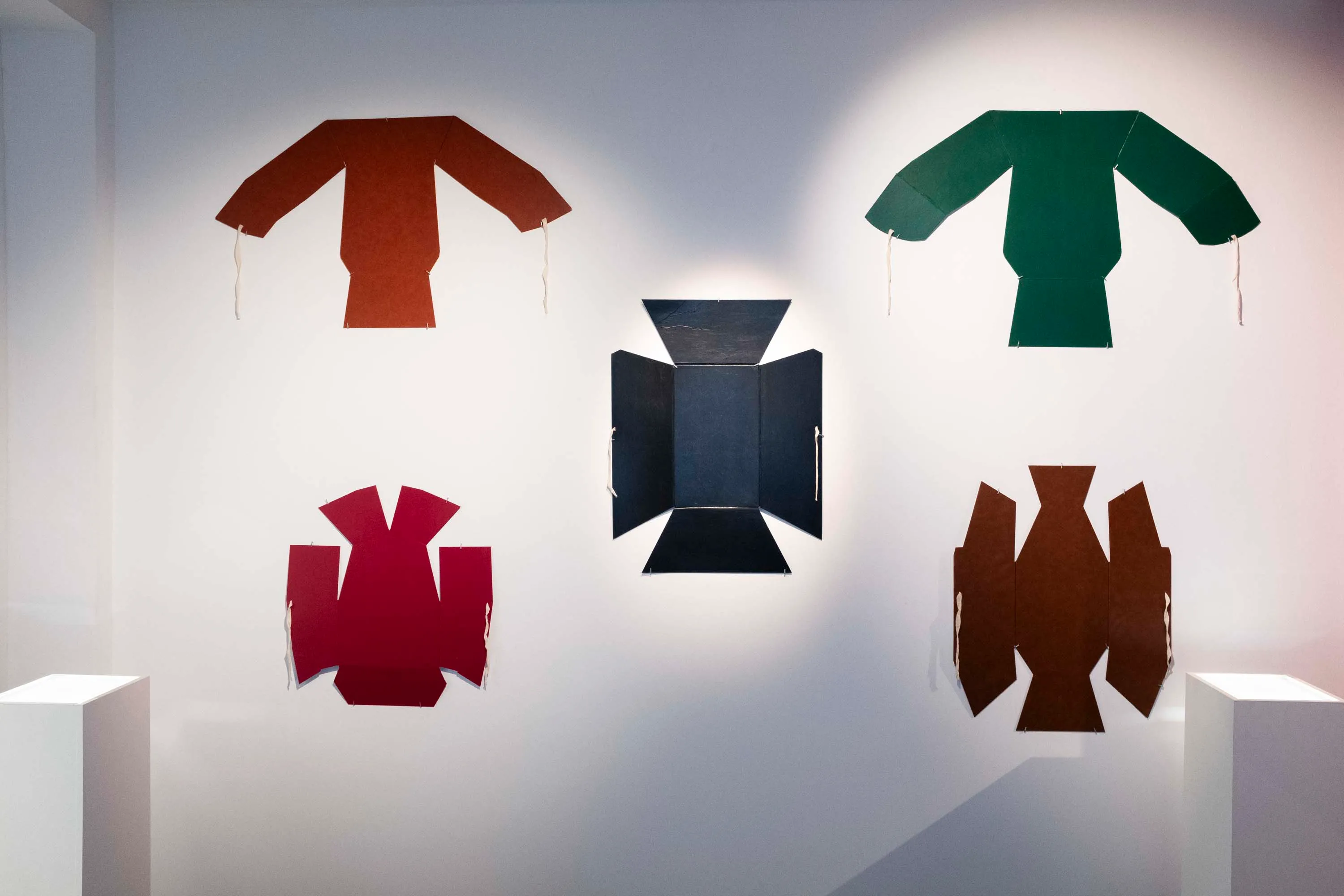
At one time, Osmolovsky transferred it to Russian art as a counterweight to the spectacular forms of Baroque postmodernism. A decade ago, he demonstrated the technique himself, and now he has used it as a meaning-generating method to reveal the meaning of the popular meme ‘They're not there.’ This is how the opposition referred to the lies that Russian propaganda spread about Russia's non-involvement in the 2014 seizure of Crimea. No matter how closely you examine them, without a hint from the author, you cannot guess what the flat ‘winged’ objects hanging on the walls mean. They vaguely resemble either Matisse inspired collages, or clothing patterns, or outlines of heraldic coats of arms. Upon closer inspection, you realise that these are office folders for documents of a very unusual shape. They are made of cardboard and fabric ribbons. They are no longer made like this, but in the past, such folders were used to store all kinds of ‘cases’ – the operational archives of various offices, ministries, courts, factory administrations and other institutions. Osmolovsky shows the folders unfolded, but if you fold them correctly and tie them with ribbons, to our great surprise, we see the same volumes of tank turrets. The author's idea is clear: the main product of society is weapons, and the collective efforts of citizens lead to the reproduction of the cult of violence. Osmolovsky seems to be illustrating the well-known Soviet saying: ‘Whatever our people do, the result is always a Kalashnikov assault rifle.’ However, this underlying meaning of the work is hermetically sealed in the form of the object. And nothing—neither commentary nor title—helps the viewer to unravel it. Osmolovsky opened the folders to show that the secret hidden inside them had been discovered, that the matter had been declassified and the author had learned something. However, he did not want to share the meaning with the viewer.
Perhaps some critics will explain the author's arrogance by the need to deceive and confuse the censors, who are once again rampant in Russia. But it seems to me that the censors have nothing to complain about in these objects. The cult of violence in them is not condemned or ridiculed, but merely stated in a form that is acceptable to everyone, including even the authorities. Incidentally, this characteristic is inherent in Osmolovsky's work in general. Maintaining a neutral-positive tone in his design, Osmolovsky balances on a fine line between analysis and complicity, conceptualism and conformism. After all, the material and formal aspects of his objects are emphatically beautiful, harmonious and magnificently executed. I can well imagine one of the hawks of war acquiring a ‘tower’ for their collection and interpreting it in a purely positive light – as a ‘hymn to Russian weaponry’.
Osmolovsky's works are far from pure conceptualism. They radiate emotion and seduction and, following the aesthetic norms of ‘neo-pop art,’ are not at all ironic or grotesque. The author believes that this position of neutral retelling is truly “democratic” because it is not ‘contaminated’ by the author's ego. Let the viewer evaluate the presented phenomenon for themselves. I would add that the author's subjectivity manifests itself and ends in the act of selecting a ‘speaking’ object. This is followed by a neutral display, which establishes (or not, if the selection is unsuccessful) the symbolic significance of this object for the culture of the moment. This position is more significant than presenting to the public (in order to recruit them to one's camp) the objects that are subjectively affected with ideological overtones or, conversely, filled with the author's bitterness.
As for the concealment technique used by Osmolovsky, it can be explained by the atavisms of Soviet underground thinking, when works were created, discussed and explained within a close circle of like-minded people, and no one thought about the distant viewer since they did not exist.
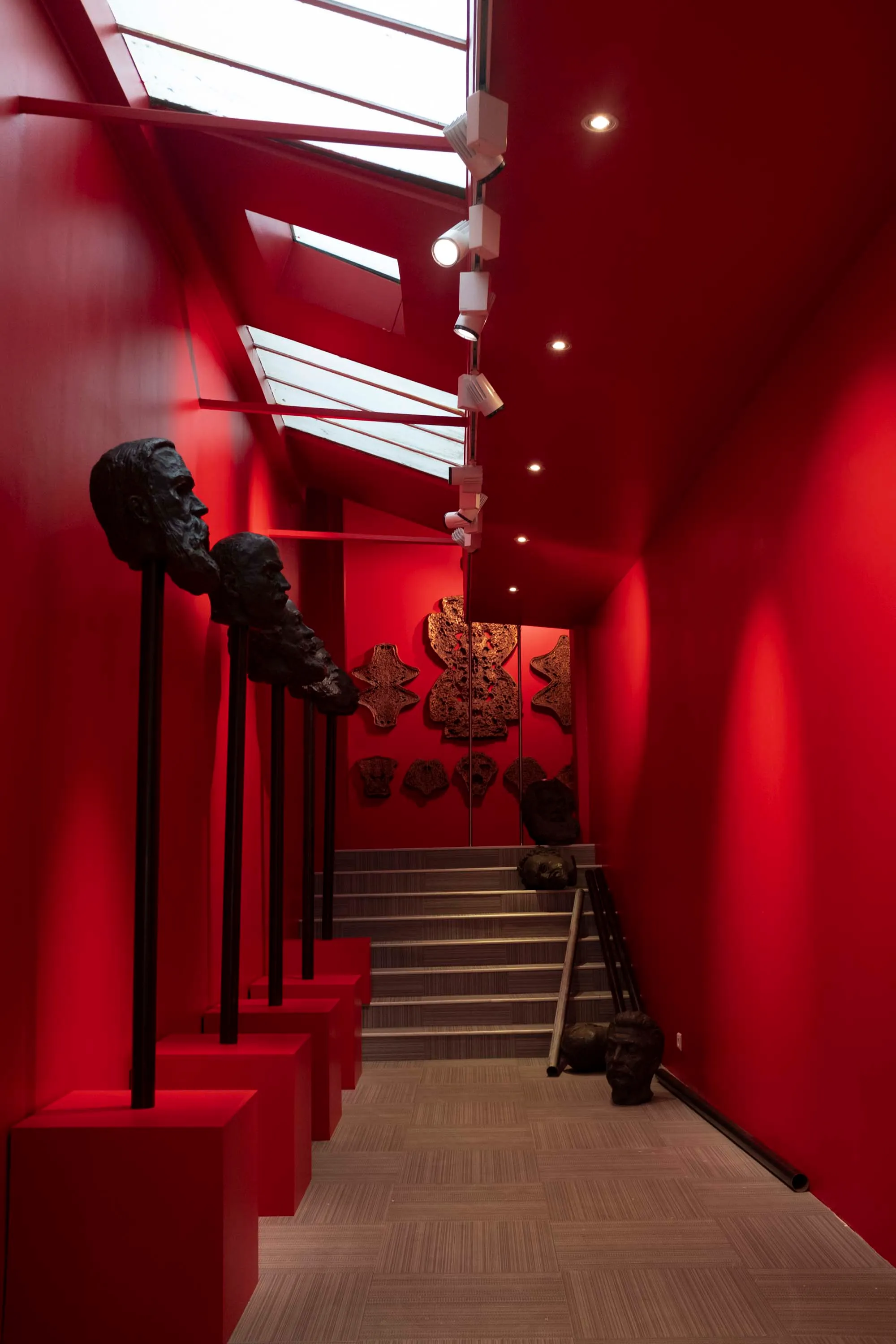
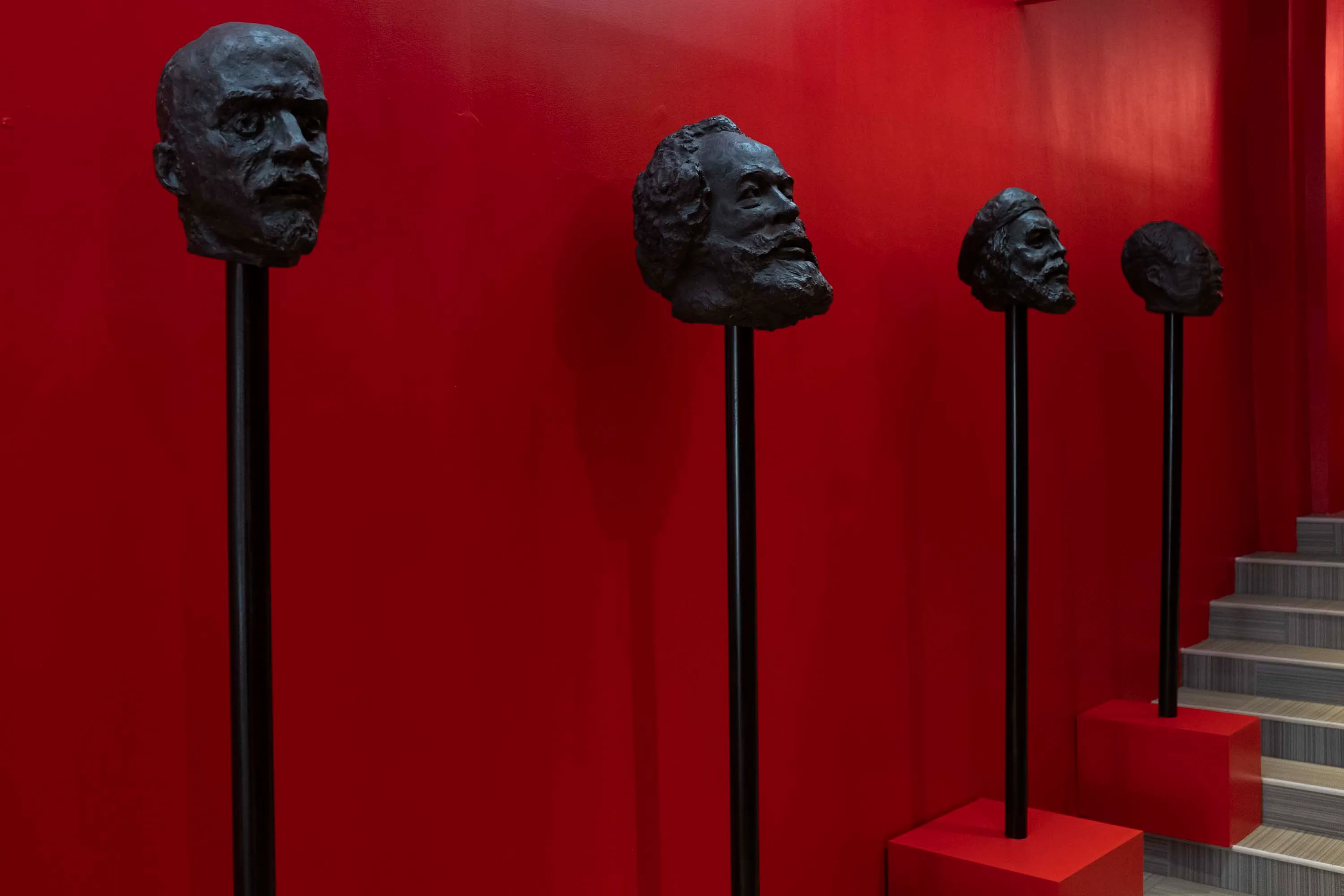
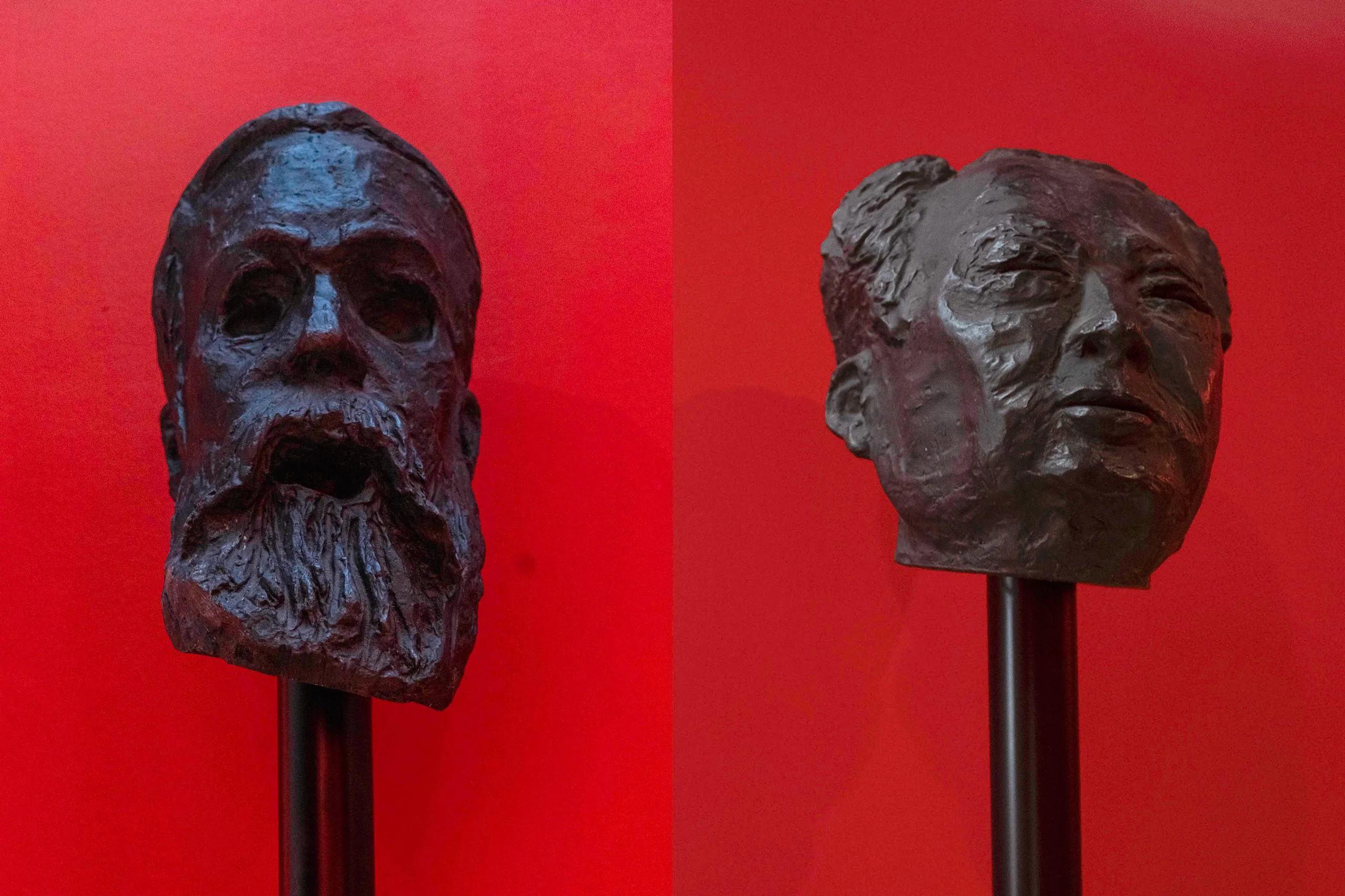
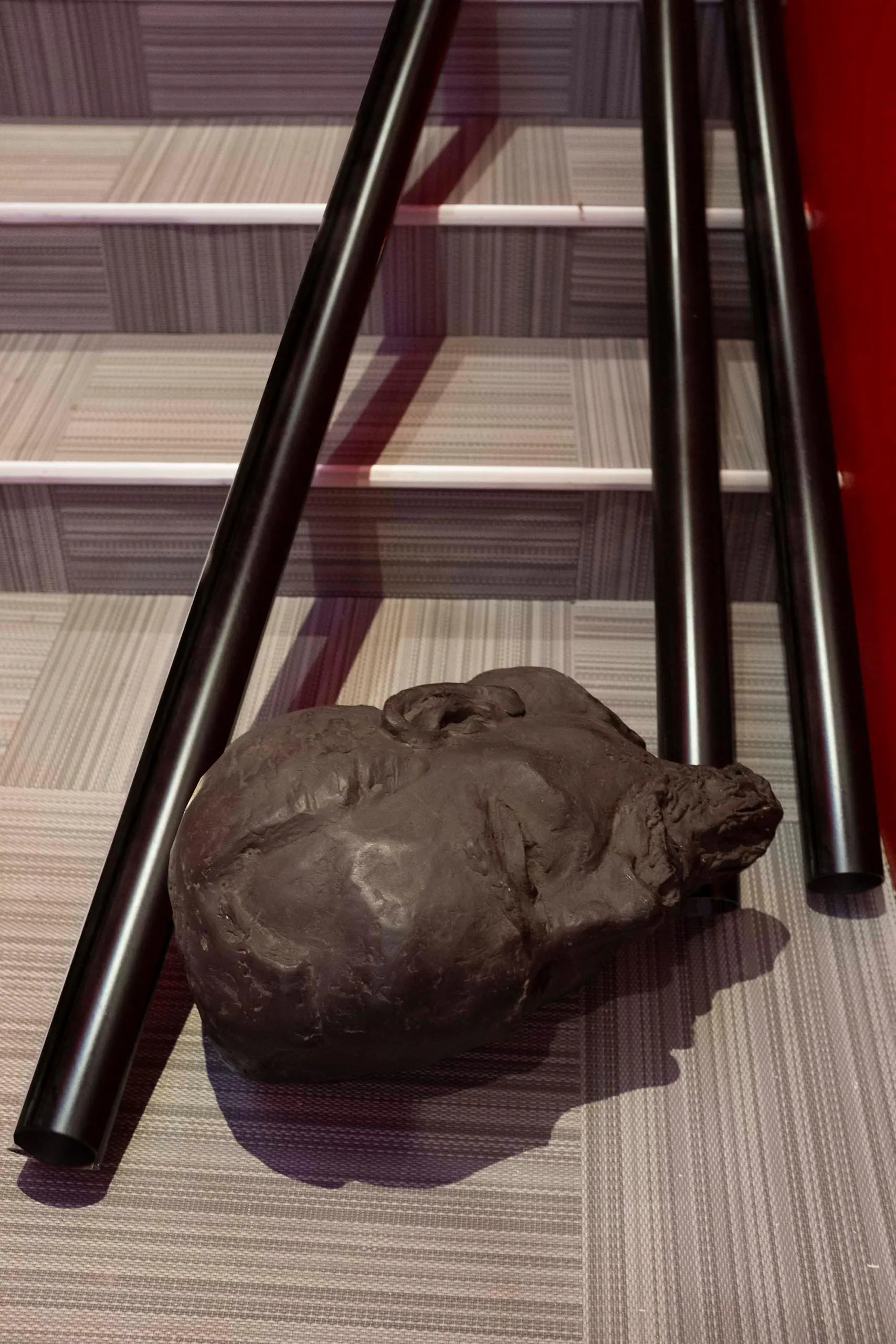
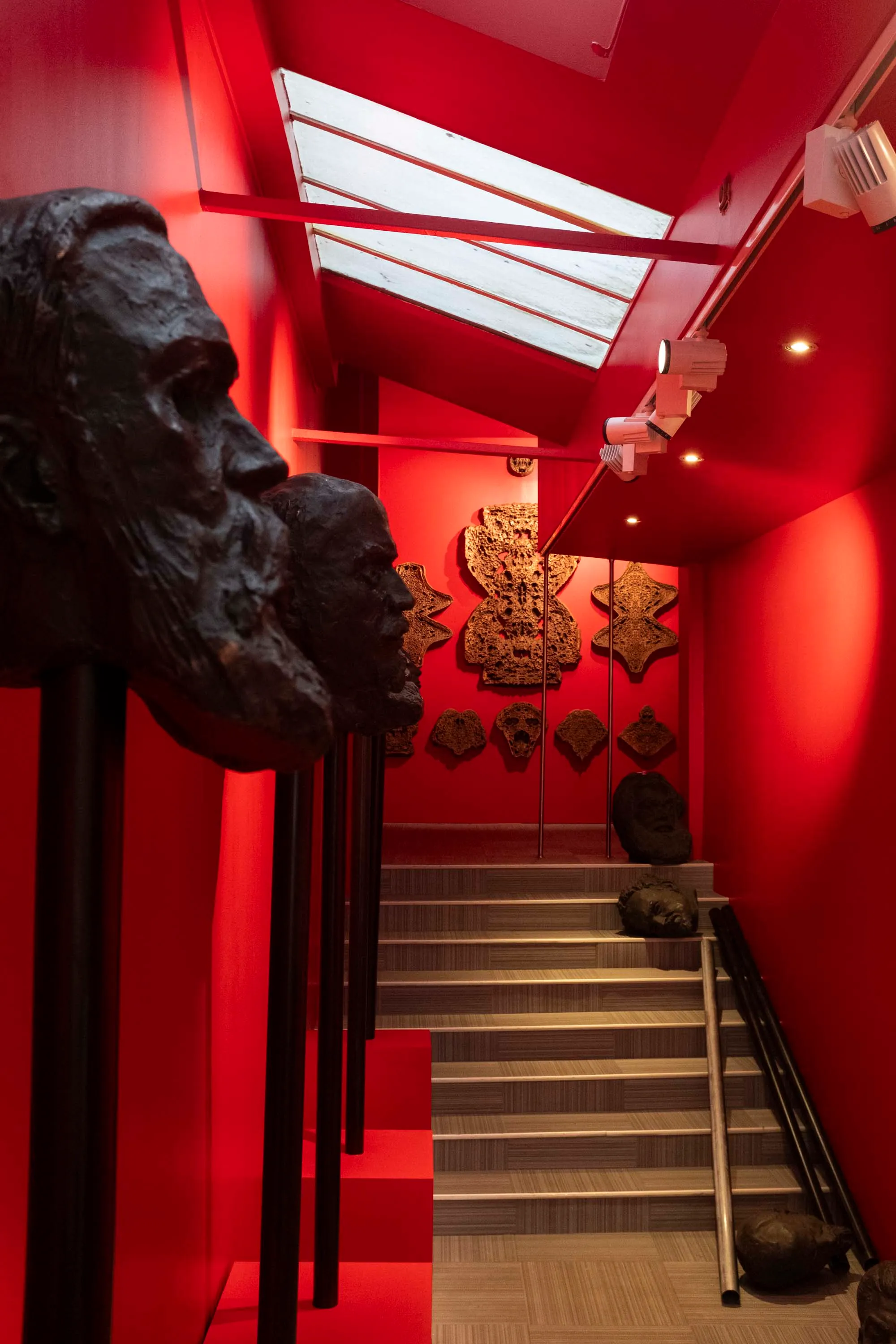
The installation is quite different – a sculptural composition with the lengthy title ‘Did you do this? No, you did.’ Everything is clear here. And the title – a quote attributed to Picasso – further clarifies the meaning. This time, it is not about the cult, but about its exposure. Osmolovsky demonstrates the downfall of political celebrities of the recent past. They cannot be called idols of all humanity, but in a certain part of the world, their power and influence of their ideas from the end of the 19th to the end of the 20th century was infinite. These are the greatest theorists and practitioners of communism and other utopian ideas – Karl Marx, Bakunin, Lenin, Trotsky, Stalin, Mao Zedong, Che Guevara, Ho Chi Minh.
Osmolovsky depicted their symbolic murder, as if carried out according to the ancient ritual of public executions by beheading. The severed heads of the tyrants are strung on sticks and put on public display. The title of the installation clearly indicates that the author distances himself from the reprisals against these people. He also denies any involvement in the creation of this work. All this was created by time and modern society. The installation became a rallying cry for the wave of destruction of monuments to tyrants that swept across the world. In the countries of the collapsed socialist community and in the former republics of the Soviet Union, people destroyed monuments to the very characters whose head statues are shown in Osmolovsky's installation. “Colour revolutions” occurred, and this vandalism was a symbol of the victory of democracy. In one of Moscow's parks they opened a museum-warehouse of ‘totalitarian sculpture’ to house many similar heads statues.
Therefore, there is every reason to consider Osmolovsky's work a monument to the debunking of the cult of these terrible individuals, guilty of mass murders on a scale unprecedented in human history. Meanwhile, Osmolovsky himself offers a different, opposite interpretation of his work. I will rephrase it. For him, these leaders are not tyrants, but revolutionaries who propelled humanity towards a bright future. Their exposure and symbolic murder, caused by the end of the USSR and the crisis of the leftist movement, led to the complete triumph of capitalism, which in its highest stage – imperialism – concentrates resources, money and power in one pair of hands, inevitably giving rise to a new wave of authoritarianism. With this approach, Osmolovsky's work appears to be a monument to the victims of political reaction and a symbol of the cult of aggressive conservatism.
I remember Marxist political phraseology from my early childhood. We were constantly forced to learn it; it haunted us at home and at work, and became so tiresome that (to use Kharms' expression) ‘it made us all sick.’ What joy we all felt when we were finally rid of it! Imagine my astonishment when, among the first generation of artists in the newly formed democratic Russia, there appeared Marxist-Leninists who enthusiastically embraced this discourse and the Soviet critique of contemporary art based on it. They opened a seminar on the study of Marx's texts and discussed the prospects for realistic art in the future communist society. This strange fascination with Marxism-Leninism can be explained by the strategy of negation which supported the ideology of non-conformist culture in the USSR. It became so ingrained in the consciousness of artists that it was passed on to a new generation — the first happy representatives of open contemporary art. They rejected both their predecessors and the very democracy that gave them creative freedom. In contradiction, they seized upon what society had rejected.
Osmolovsky did not remain on the sidelines of these discussions. Moreover, he asserts that ‘it was he who sparked an interest in Marxist discourse. Only, he adds, ‘without any Leninism, let alone Stalinism.’ And with completely different goals and sentiments than other ‘neo-Marxists’ such as Dmitry Gutov. Namely, to connect Russian art to international discourses and versions of Marxism unknown in Russia, which were developed by the Situationists, as well as the Frankfurt School and new French philosophers. He was the first to translate Guy Debord's famous book and texts from Philippe Sollers' magazine Tel quell. He created and ran several theoretical seminars for many years, which were attended by dozens of artists. He was, indeed, a passionate and successful conduit for the integration of Russian artists into the global avant-garde process. In this sense, the authorities were not mistaken in calling him a foreign agent: it is difficult to find a greater ‘Westerniser’ in our art.
His interests were not limited to Marxism. Osmolovsky took a more flexible position – poly-discursiveness. He did not want to join anyone or become anyone's follower. Everyone remembers his famous slogan ‘Against everyone!’, which he displayed on Lenin's Mausoleum. At the same time, he recognised the diversity of trends of the time and agreed to engage in discussion with everyone. I think he sought to embrace and test all creatively promising discourses in practice. This flexible tactic was supposed to lead him to his self-declared goal of becoming the foremost artist of his time. Hence the surprising diversity of Osmolovsky's art. He was involved in performance art, political actionism, abstraction, formalism, post-conceptual explorations (non-spectacular art), postmodern exoticism, various versions of new sculpture, neo-pop art, and multi-component installations synthesising words, sounds, and objects. He tried everything and experienced everything. Those who reproach Osmolovsky for the eclecticism of his formal structure and artistic techniques fail, in my opinion, to grasp the direction of his explorations. For him, artistic practices and styles are merely tools that allow him to highlight and materialise the key ideologies of the time. If one tool does not suit him, he replaces it with another. In his view, the ‘first artist’ is an author who is in line to the cultural moment, whose work is capable of representing everything essential and original that characterises the present time.
It is not surprising that he was interested in the far-right nationalist discourse that has been rapidly gaining momentum in Russia since the 2010s. Its proponents and propagators are an eclectic conglomerate of people thirsting for revenge, in which communists have merged with admirers of Nazism, nationalists have joined forces with adherents of Italian fascism, and Orthodox preachers have sided with followers of paganism. Fragments of their ideological delirium were glued together into a programme called ‘Eurasianism’. In short, the ‘Eurasians’ advocate the return of all former territories of the USSR by force of arms and the construction of an anti-Western totalitarian Russian empire based on a huge army and an Orthodox ‘people of God’ who have renounced Western education and returned to peasant labour.
Recently, the influence of this political movement on the government has grown significantly. For example, the government recently initiated legislation to restructure the country's social life and culture based on ‘traditional values.’ ‘Eurasianism,’ like no other political movement, has been reflected in contemporary art. One of its main proponents is the renegade artist Belyaev-Gintovt, who challenged Western-style contemporary art and opposed it with ‘conservative-revolutionary’ academicism. Interestingly, when asked who he considers to be the worst artist in Russia, Belyaev-Gintovt replied: Osmolovsky.
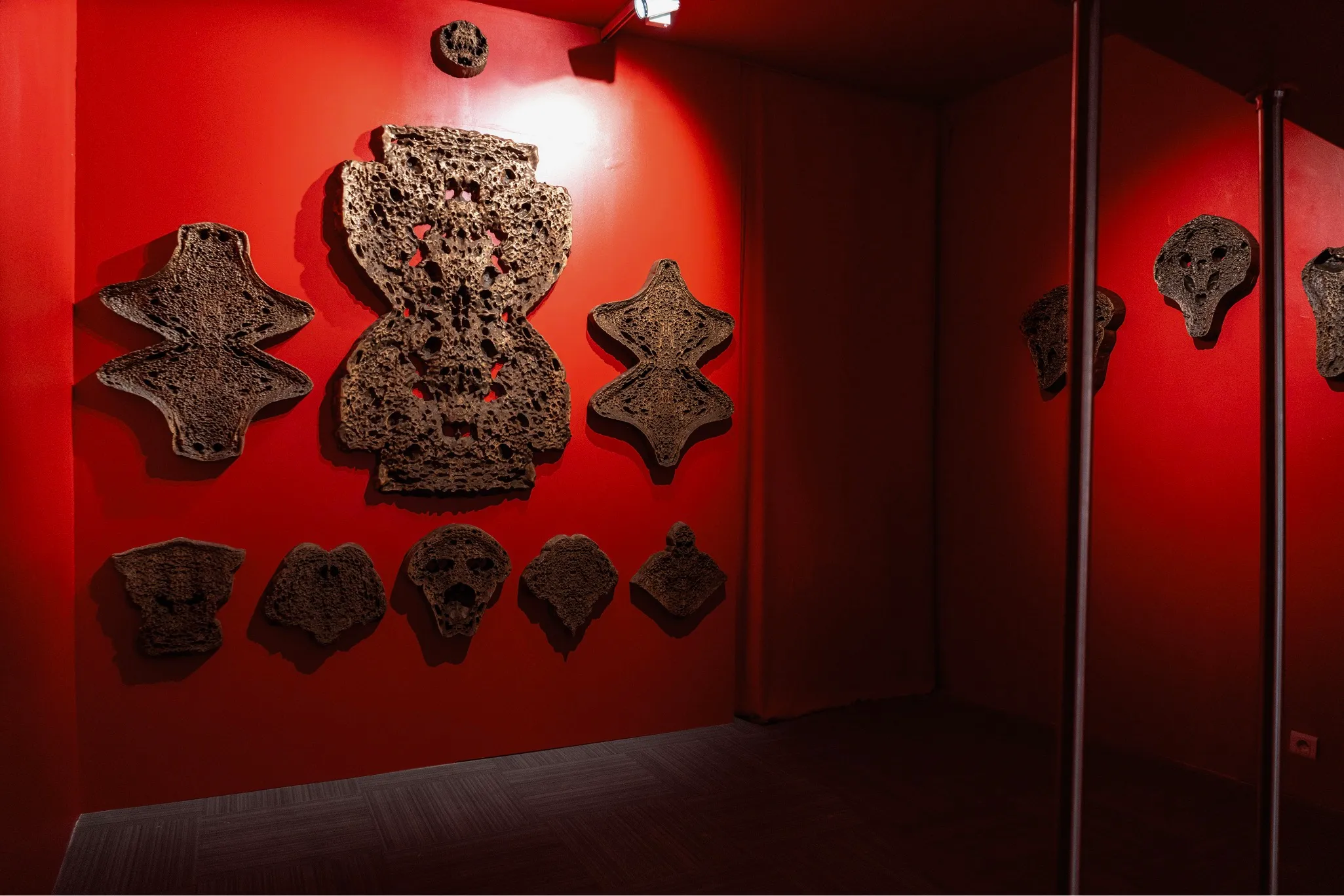
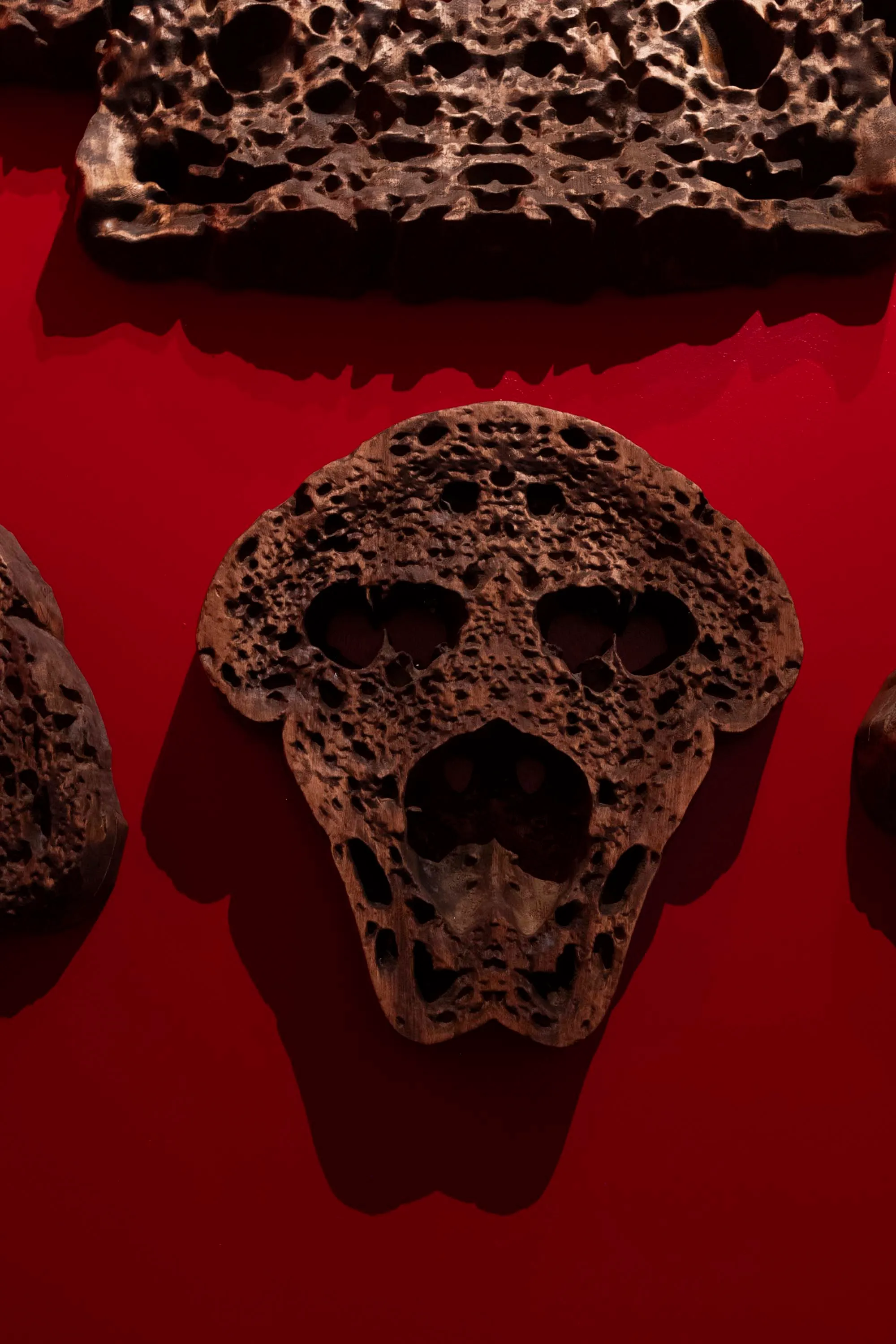
I think this animosity stems from the fact that Osmolovsky was the only artist who responded to ‘Eurasianism’ not only with sharp verbal attacks, but also with a remarkable work of art – the installation ‘Bread’. This work became so popular that Osmolovsky subsequently produced several versions of it. The latest version differs from the original, and it is interesting to understand the meaning of these changes. But first, I will describe the general theme of the work. The installation consists of several sculptural relief objects representing greatly enlarged slices of black bread. One might think that Osmolovsky depicted typical Russian bread. This is not entirely true, because such bread is eaten not only in Russia, but also in Germany, where it is called ‘pumpernickel.’ Special technique of drying allows it to be cut thinly and creates a ‘holey’ surface of the crumb, resembling a continuous pattern. That is exactly the shape of Osmolovsky's objects.
The allusion to German bread is significant because, as is well known, baking bread, harvesting crops, sowing seeds and peasant labour in general were considered fundamental values of the nation in Nazi Germany as part of the Blut und Boden policy. Along with militaristic themes, the peasant theme was dominant in German visual art during the Third Reich. Continuing this tradition, the leader and chief ideologist of ‘Eurasianism,’ Alexander Dugin, placed bread—a symbol of man's spiritual connection to his native soil—at the centre of his concept of conservative revolution. Here are some of his quotes: ‘The cultivation of grain, and especially bread, was regarded by our ancestors as a sacred occupation, a special cosmic liturgy.’ ‘Bread is our destiny and our future.’ ‘The West will eat larvae and worms, and we will eat lush-textured, rich Russian bread.’
.jpg)
--%20Large.webp)