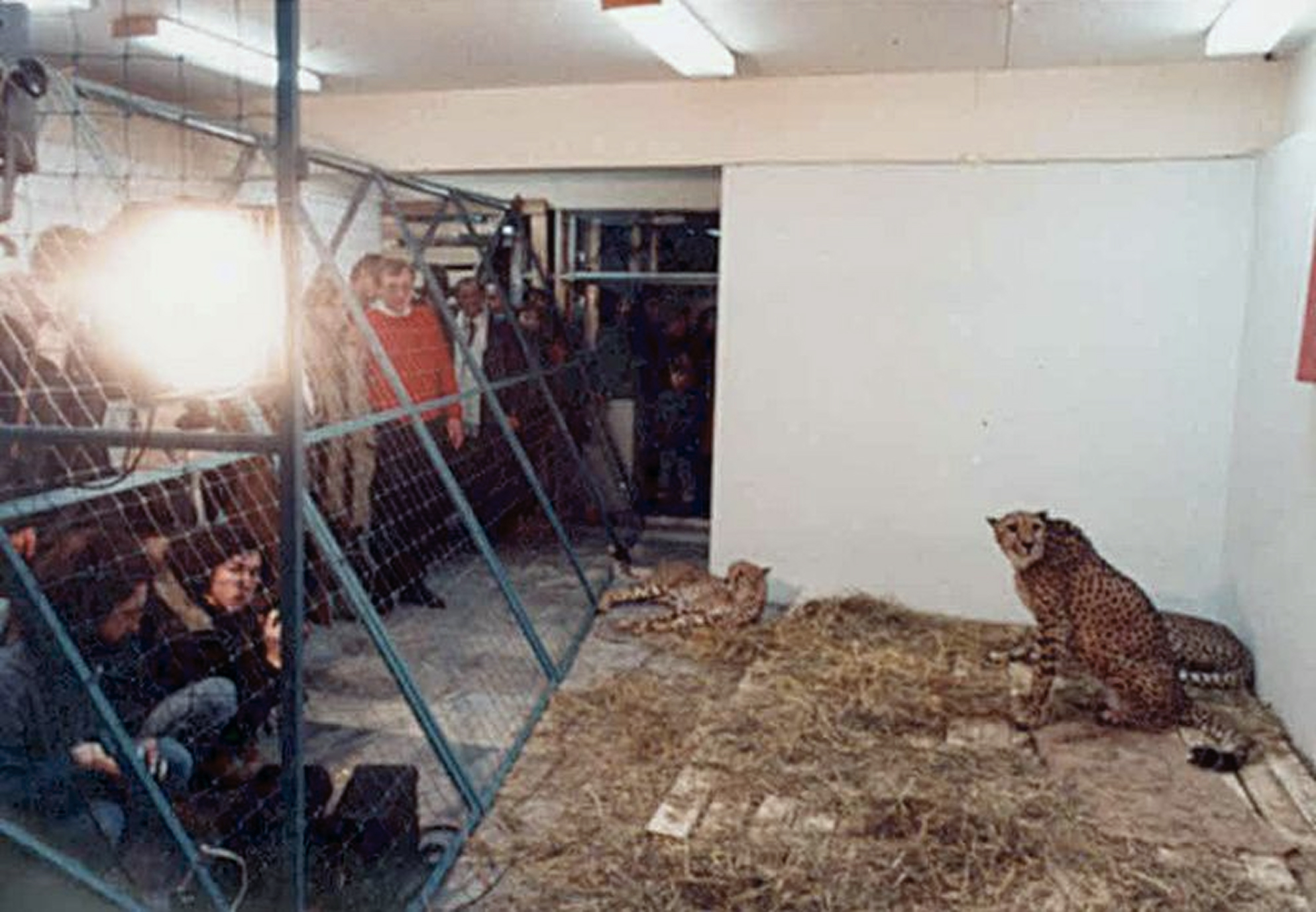
Leopards break into the temple
March 5, 1992
Installation-performance as part of the ‘Animalistic Projects’ installation festival, curated by Oleg Kulik
Vladimir Ovcharenko’s ‘Regina’ Gallery
‘Leopards storm the temple – they plunder the sacred vessels. This happens again and again; eventually, people get used to them, and they become part of the ritual.”
This Irish parable inspired Jacques Derrida’s thoughts on postmodernism. It also became the foundation for my own work.
In the early 1990s, postmodernism swept through the art world. It became the standard for what was considered ‘legitimate’ art. Artists everywhere were quoting, using irony, and making jokes. I started my career as an artist in this environment.
But I viewed postmodernism with extreme scepticism. On the one hand, it felt as though its prevalent form in Russia was rather primitive; on the other, its playful, jocular version seemed utterly unconvincing and frivolous. My critique of postmodernism was conducted from avant-garde, politicised positions. The primary objective was to highlight the political aspect of the classical avant-garde.
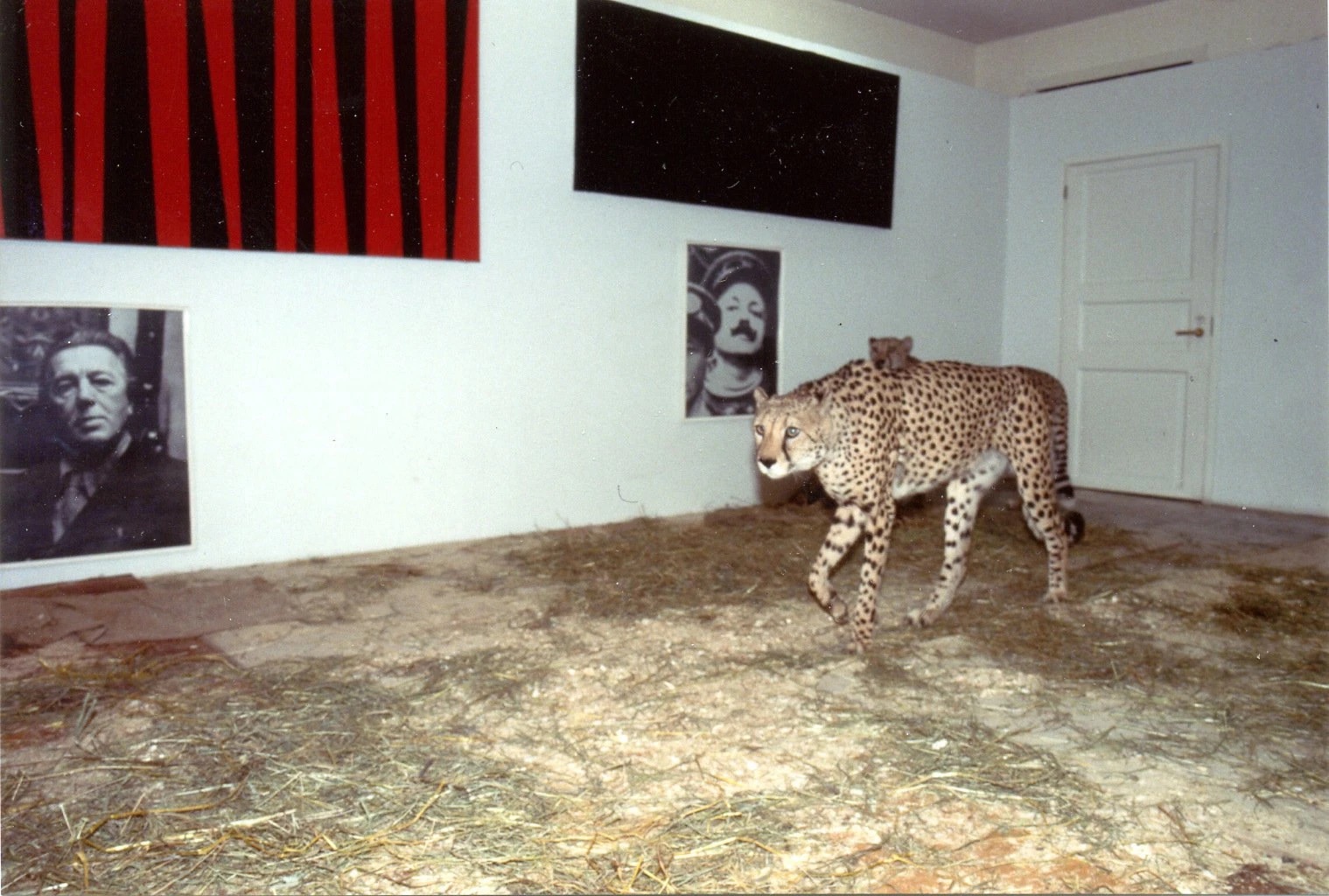
The installation itself, created entirely in the spirit of postmodernism and in line with postmodernist principles, is, as it were, a form of self-irony: a demonstration of the impossibility of breaking free from the postmodernist paradigm. A rather accurate observation for the time. After all, it was precisely then that the now-common ‘terms’ emerged: ‘decorative revolutionaries,’ ‘clown revolutionaries,’ and so on. This installation-performance did indeed contain a significant element of decorativeness and clowning (if only because the ‘leopards’ were actually cheetahs, as leopards were unavailable and had been borrowed from the Kursk circus). It was also then that the concept of the show-event came to the fore, which is likewise one of the most important aspects of postmodernism. Nowadays, all this is perceived as a rather reactionary utopia, but at the time, the opposition to conceptualist asceticism demanded a spectacular spectacle.
The installation is dedicated to the modernist movements in 20th-century art.
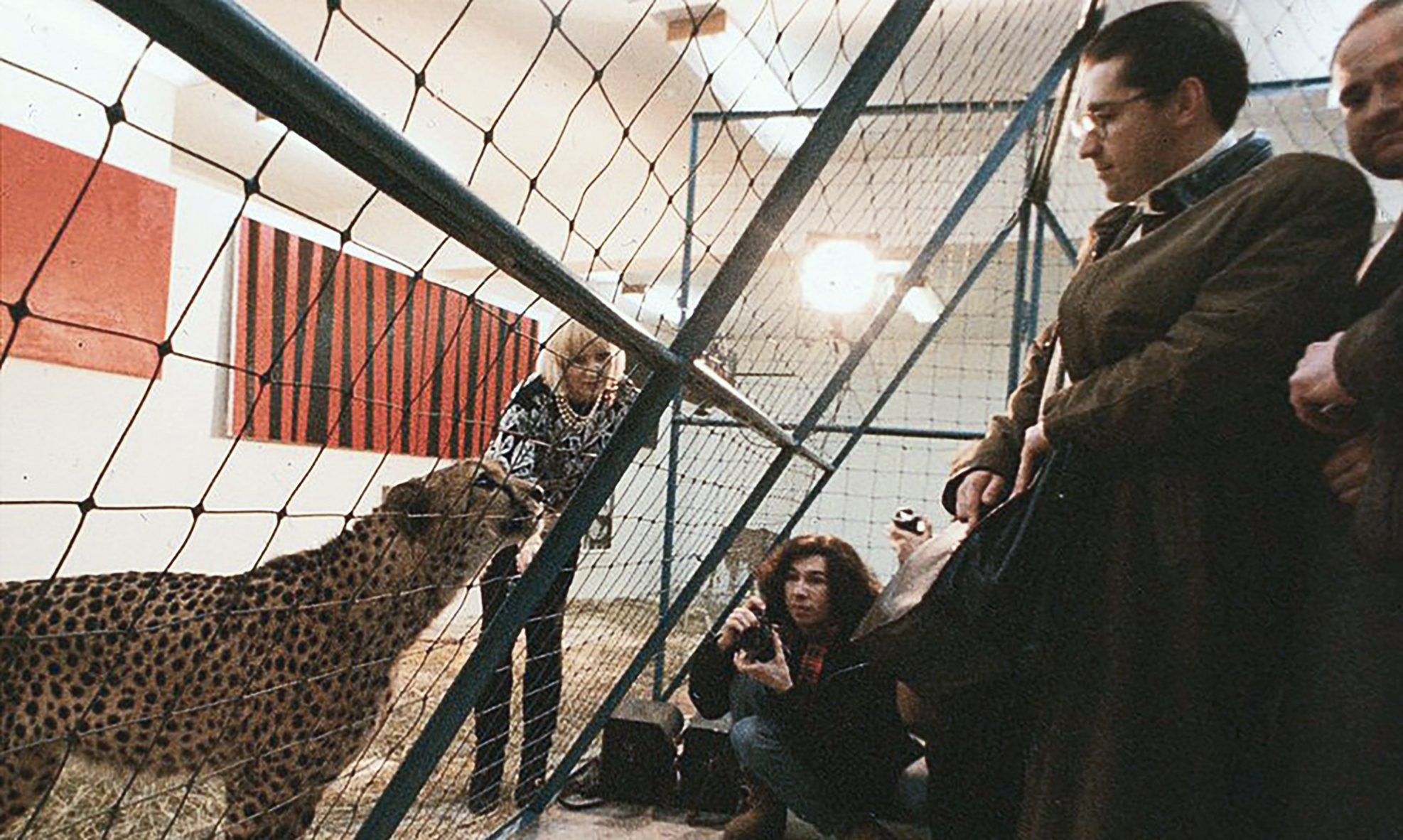
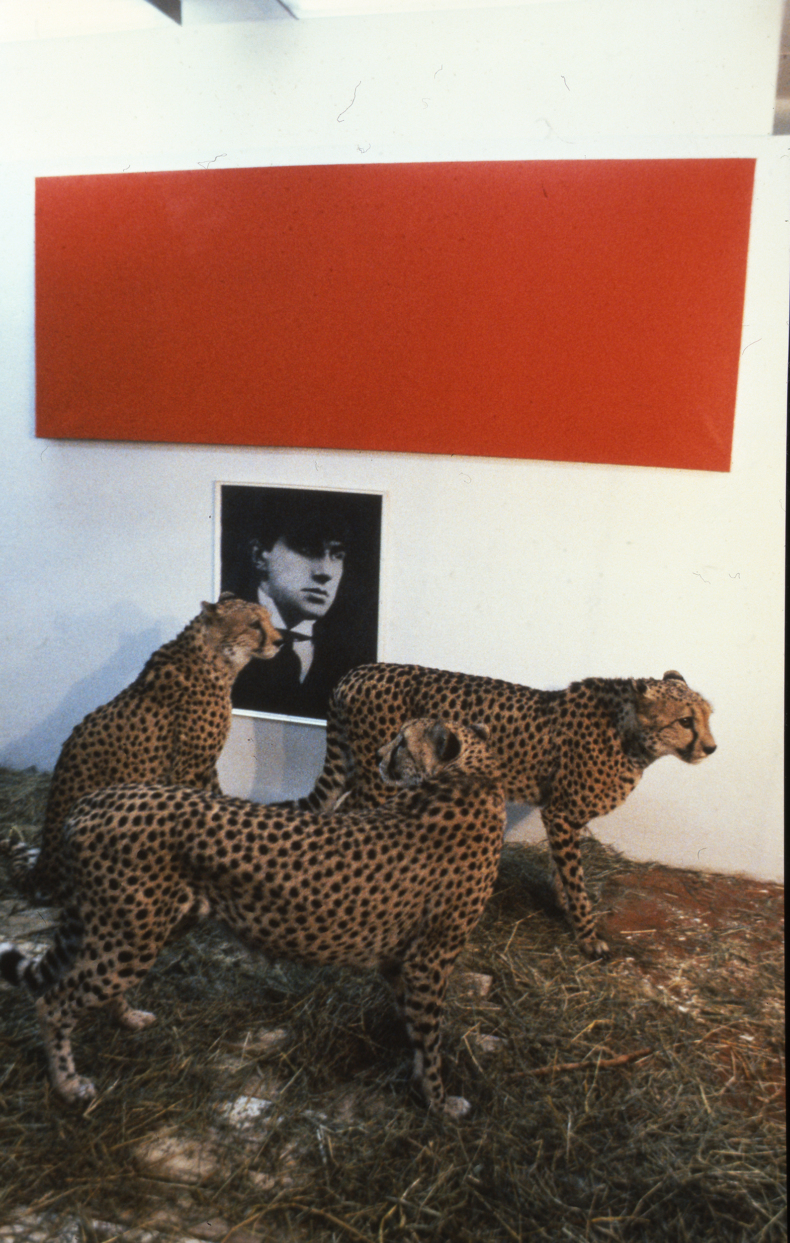
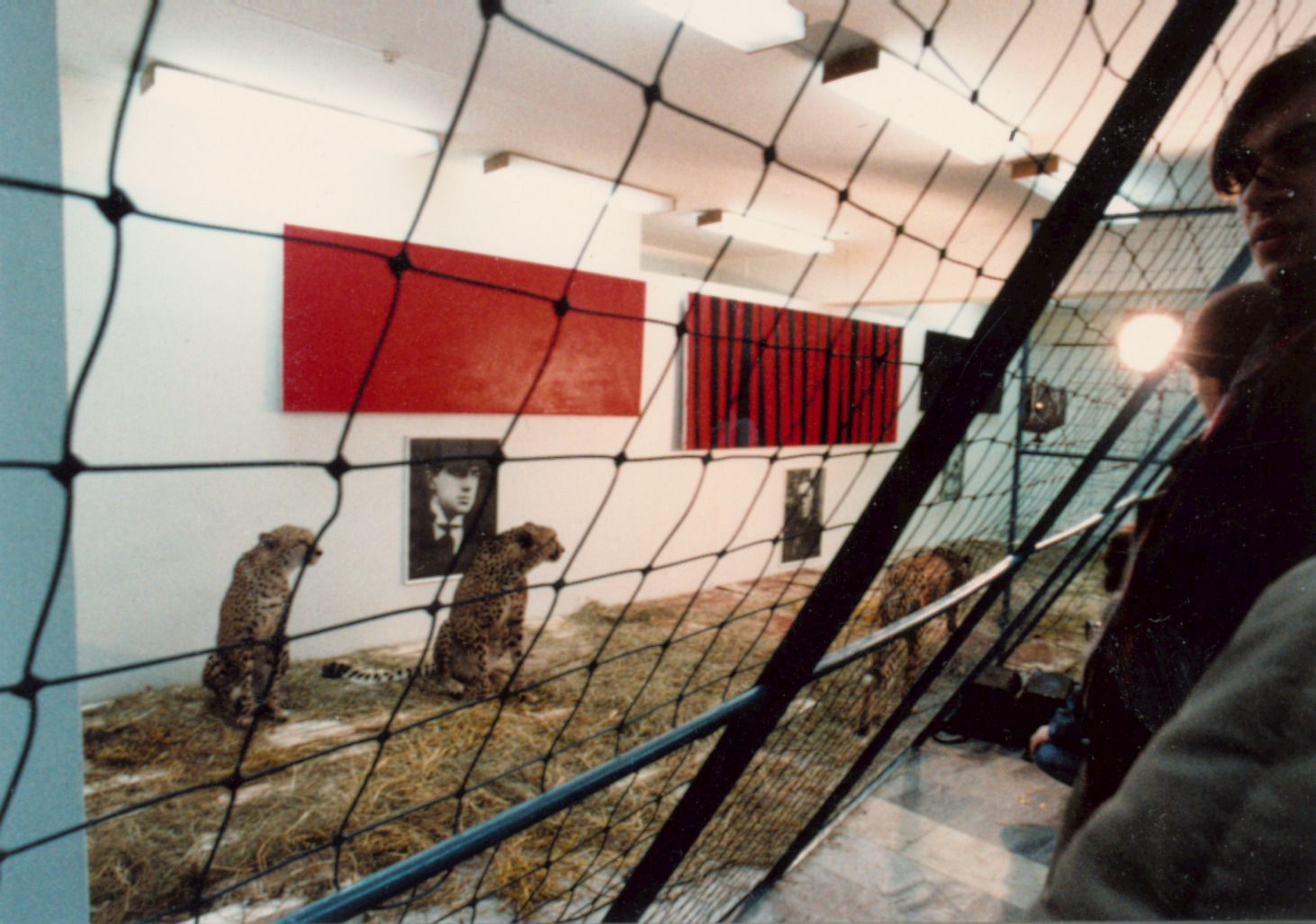
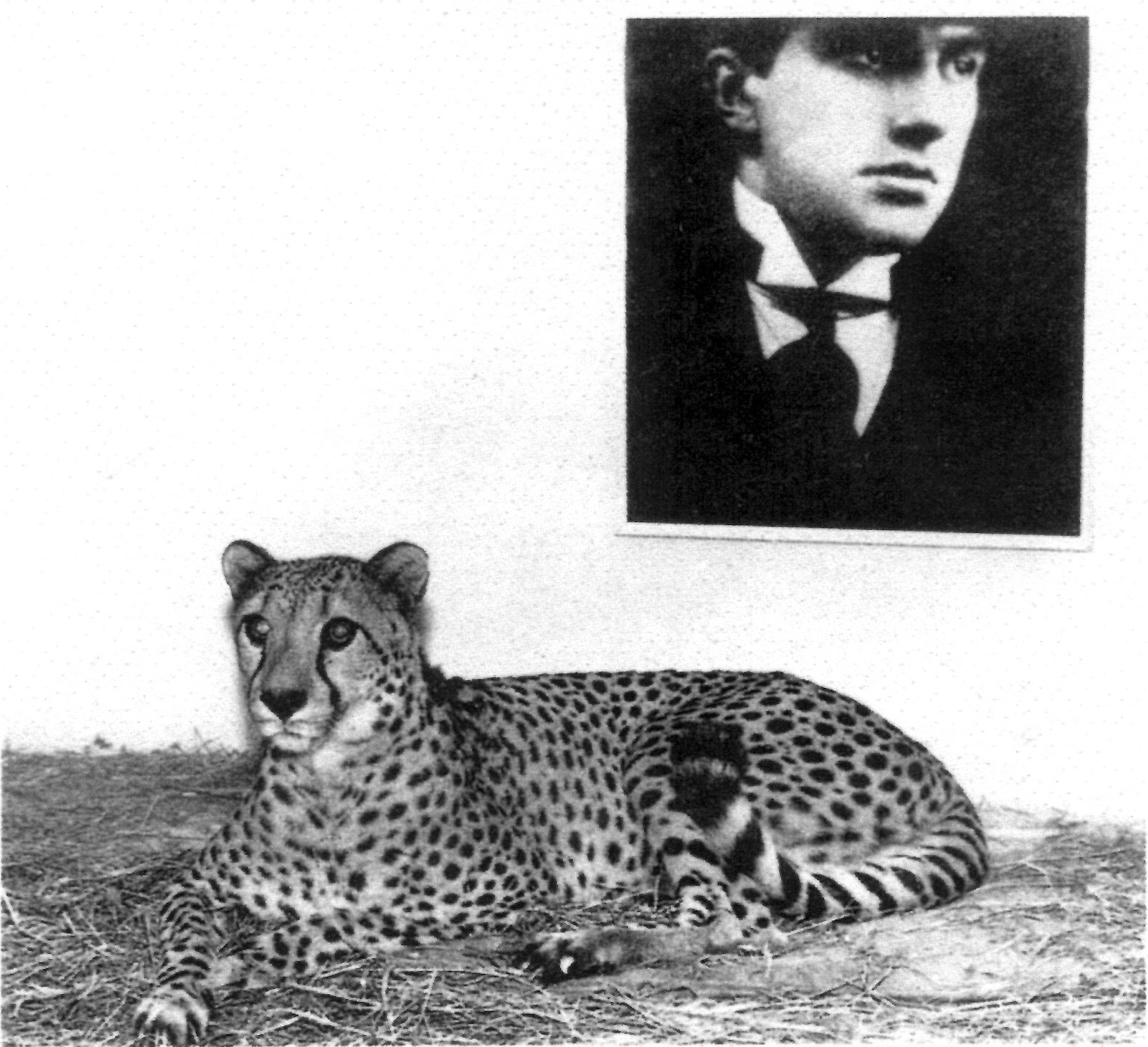
On the wall hung photographs of three poets who were the leaders, and to some extent the organisers, of the three most important movements in art – Futurism, Surrealism, and the Left Front of the Arts. Above each of them hung a canvas reflecting the dimensions and proportions of the most famous big cats:
‘Red – Lion – Mayakovsky’ (Communist utopia)
‘Red and Black – Tiger – Breton’ (Surrealist Anarchism)
‘Black – Panther – Marinetti’ (Fascist Movement)
Three ‘leopards’ were roaming the gallery, separated from the public by a mesh screen. It was as though they were the ‘masters’ of the exhibition space, rather than the spectators. The atmosphere at the event was quite festive. The animals truly created a significant effect of apparition – a miraculous phenomenon. In essence, it all operated within the ready-made paradigm: the exhibition hall simply featured ‘leopards’ that one would normally see elsewhere – in the circus (or, well, at the zoo). Together with images of historical avant-garde artists and the minimalist, monochrome paintings usually associated with the avant-garde, they were part of an entertainment show for the ‘rich.’
.jpg)