The Subject and Power (the lyrical voice)
2001
Exhibition as part of the “Art-Moscow” fair, Central House of Artists, Moscow
Curators: Roger M. Bürgel and Konstantin Bokhorov
This exhibition was included in the parallel program of the Art Moscow fair in 2001. At the time, the Russian art market was not yet established, allowing the fair to feature numerous non-commercial events such as lectures, roundtables, and exhibitions. In my view, this was the most successful edition in the fair’s history. Roger Bürgel, then a young and relatively unknown curator who would later curate Documenta XII, brought in a number of interesting but very unusual artists working in a non-spectacular style, and also invited Kirill Preobrazhensky and me to participate. Konstantin Bokhorov was part of the curatorial team.
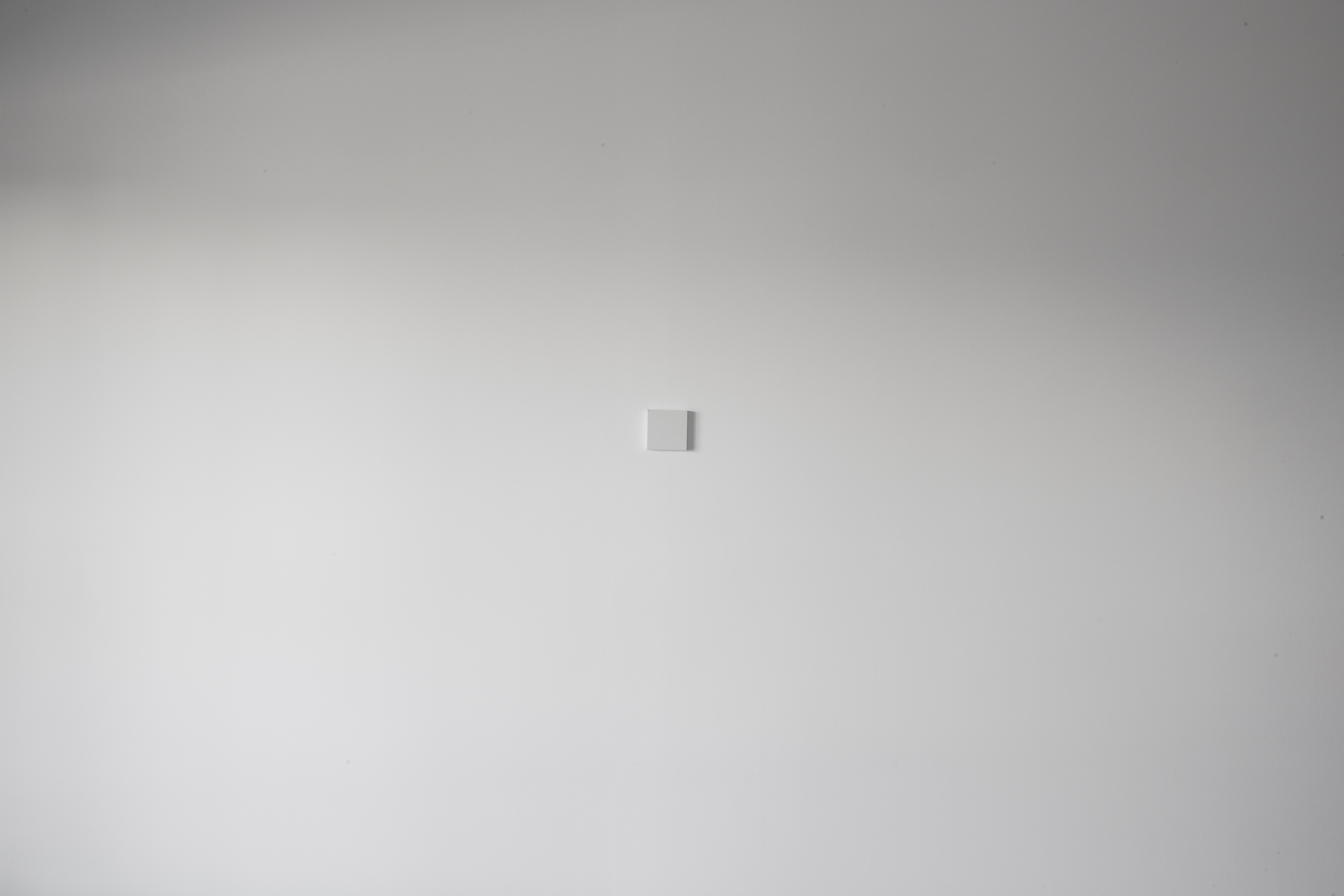
‘A critique of the condition of the walls’
As everyone knows, the Central House of Artists has disgusting, unrestored walls on which the works are hung. Furthermore, it’s forbidden to drill into the walls, so the works are hung on some dirty ropes dangling from iron handrails on the ceiling. People have long been outraged by this practice at the Central House of Artists, and my work was a cry from the heart—even an expression of public opinion. I took a perfect piece of particleboard, covered it with pure white paint, and simply placed it against the wall to show what a wall should and should not look like.
‘Sacks of charcoal’
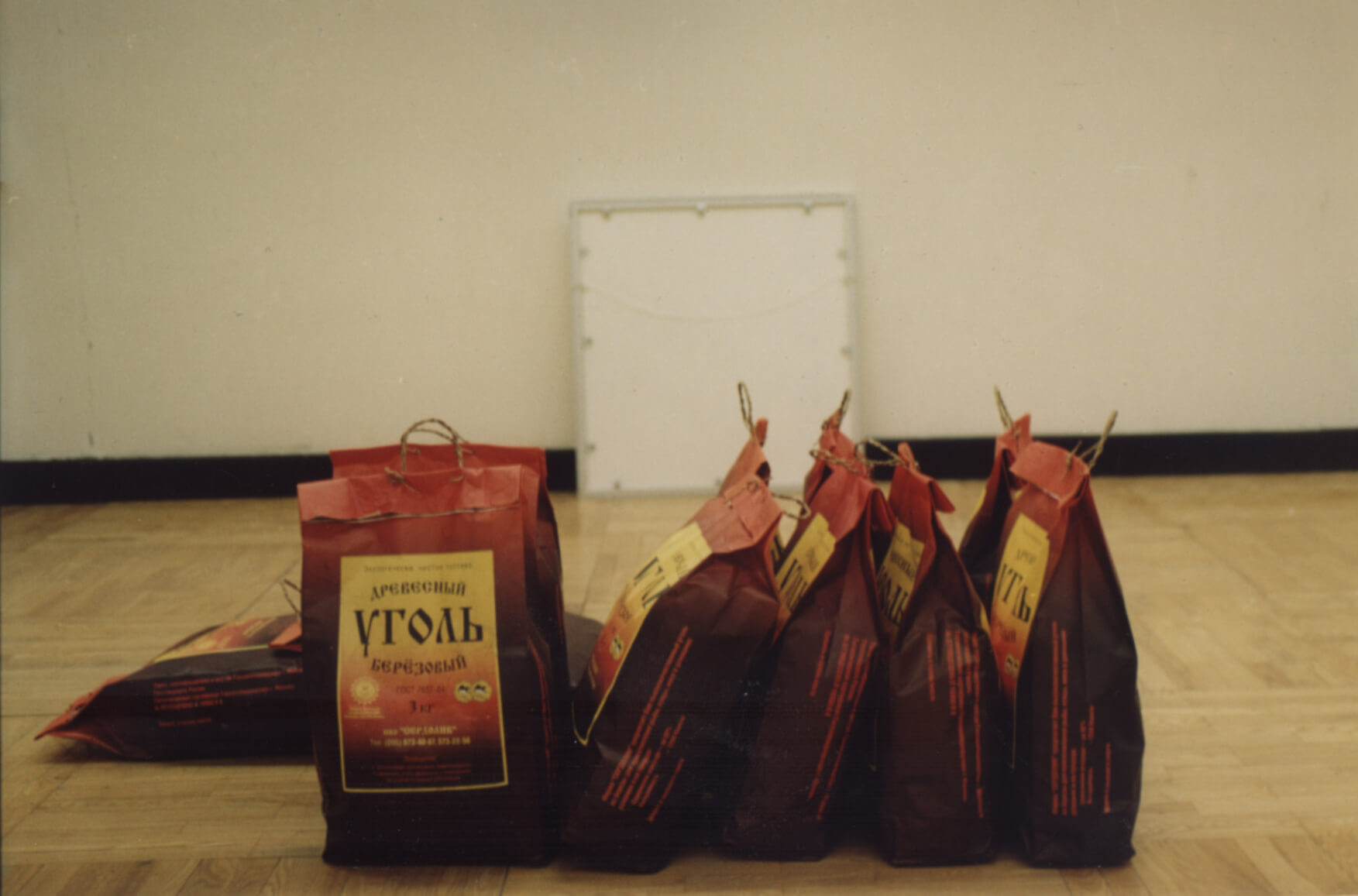
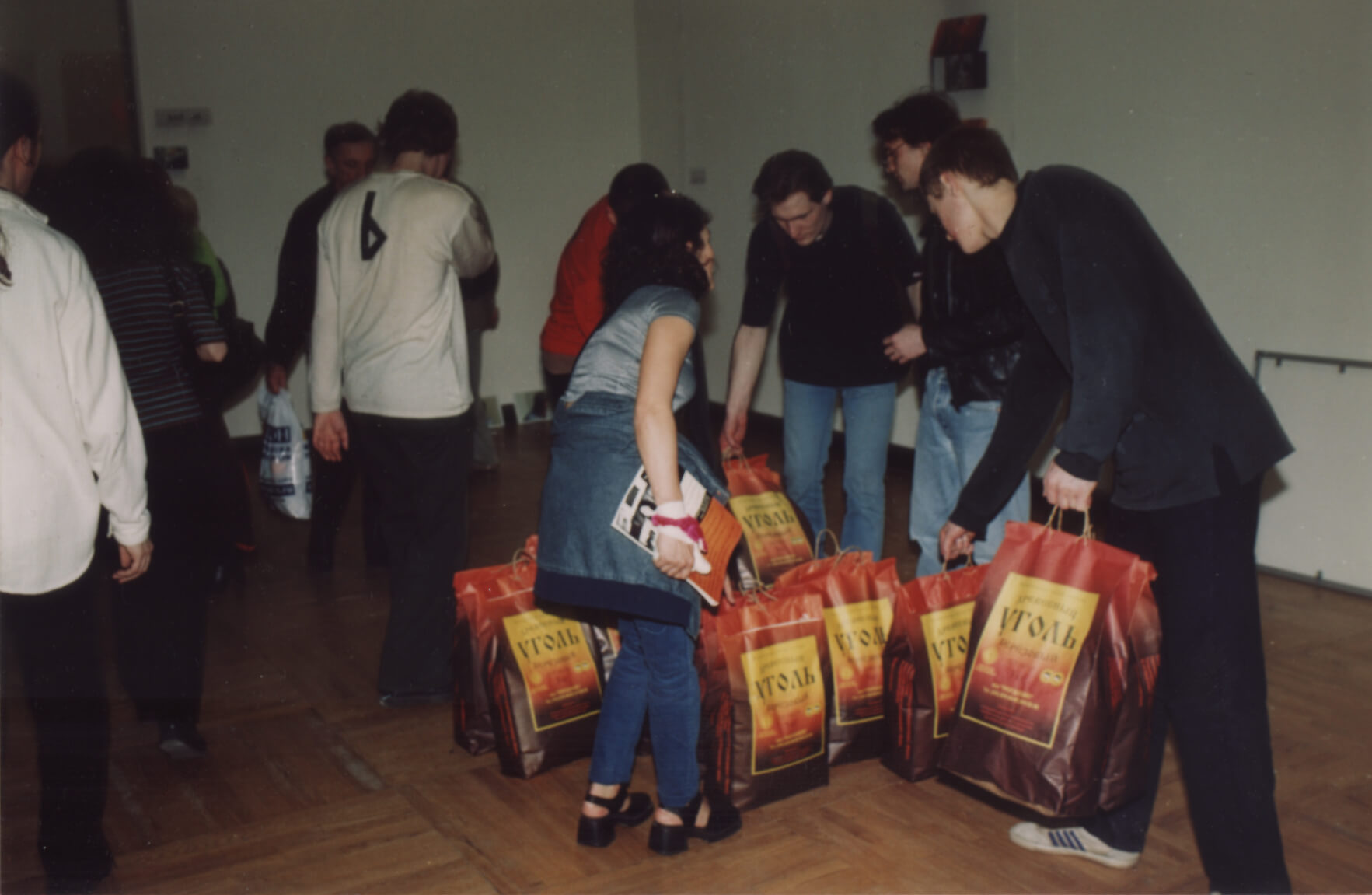
Several hundred sacks of charcoal were purchased (at the time, charcoal for barbecues was a novelty); these were handed out free of charge to visitors at the entrance during the exhibition opening. We found a company that made kitsch-style sacks with something written on them in Old Russian. The result was meant to be an absurd scene: everyone walking around the art fair, looking at art whilst holding sacks of charcoal. The band ‘Radek’ also took part.
‘The double’
I found a double of the critic Evgenia Kikodze, who was attending the exhibition. Naturally, she was aware of the arrangement. They were even dressed identically.
‘The theft of the painting’ (in collaboration with K. Preobrazhensky)
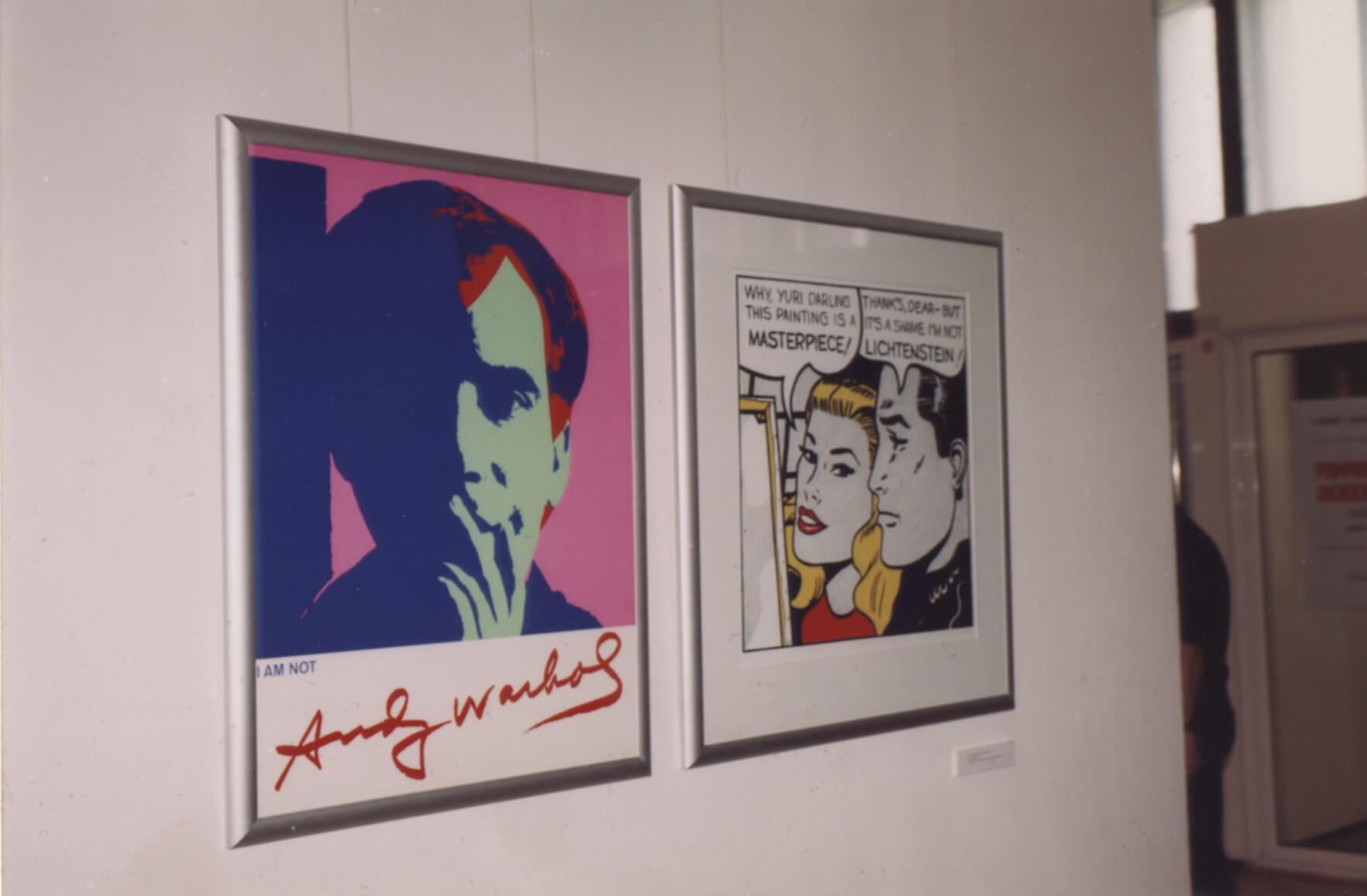
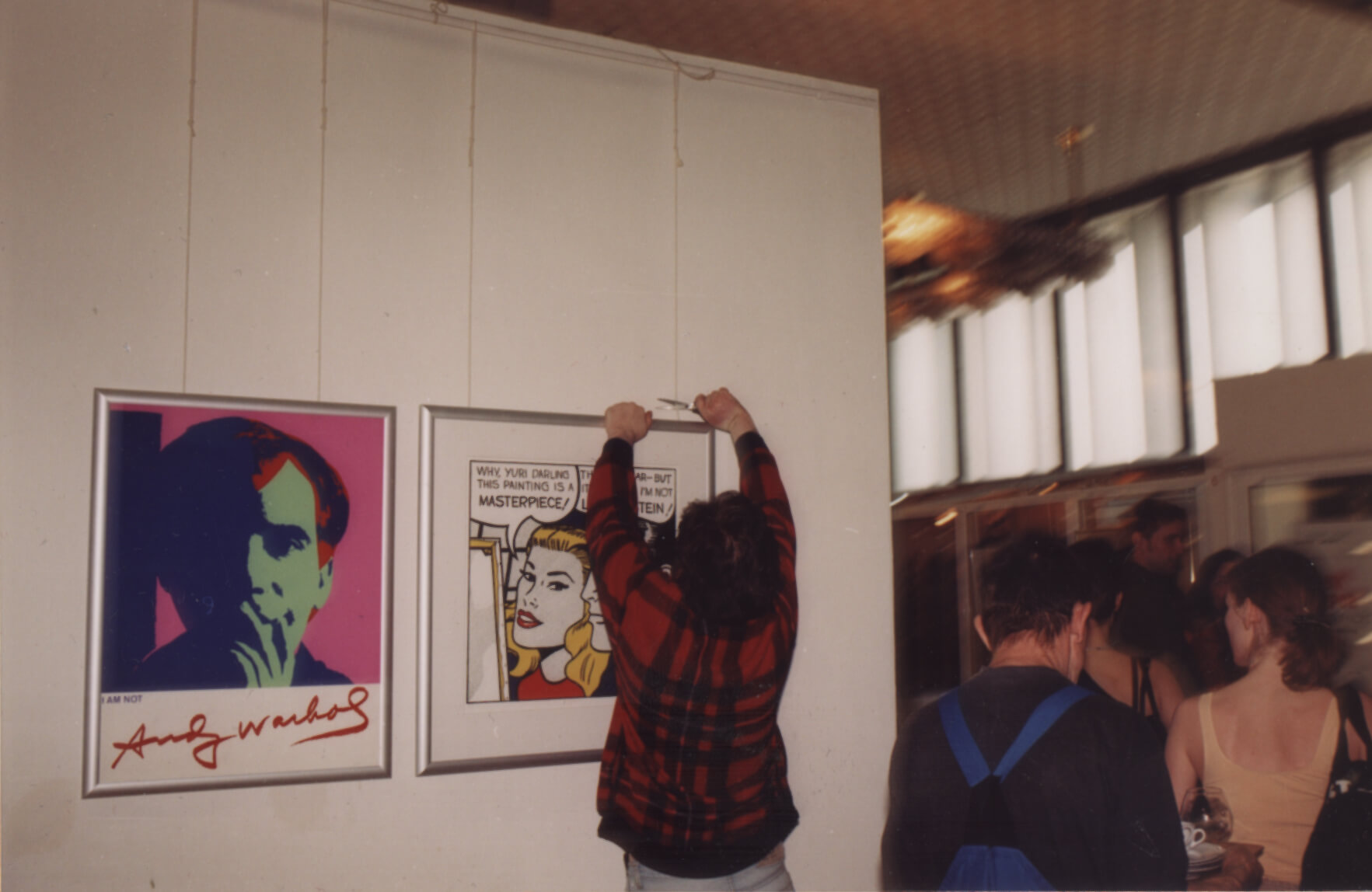
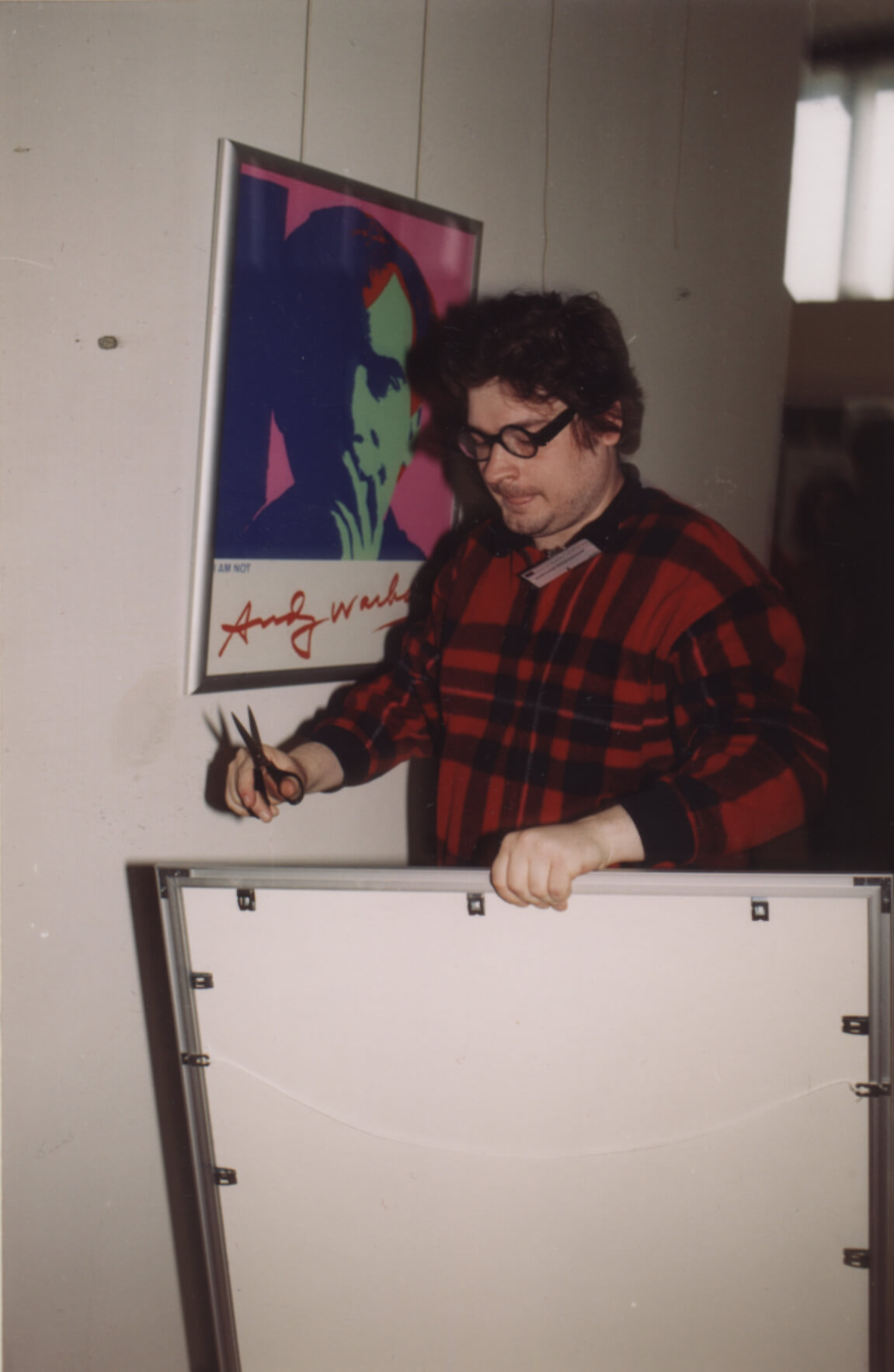
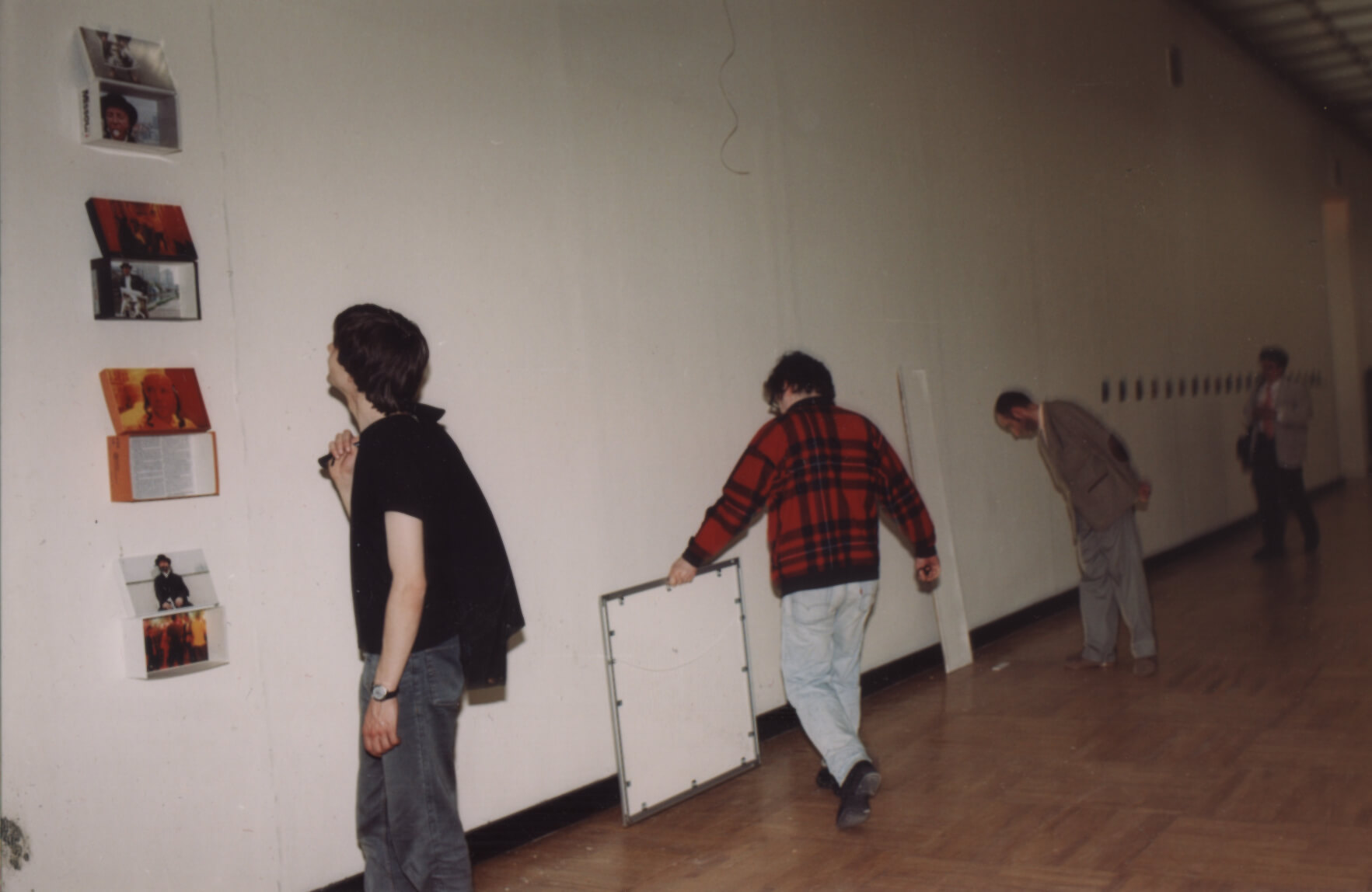
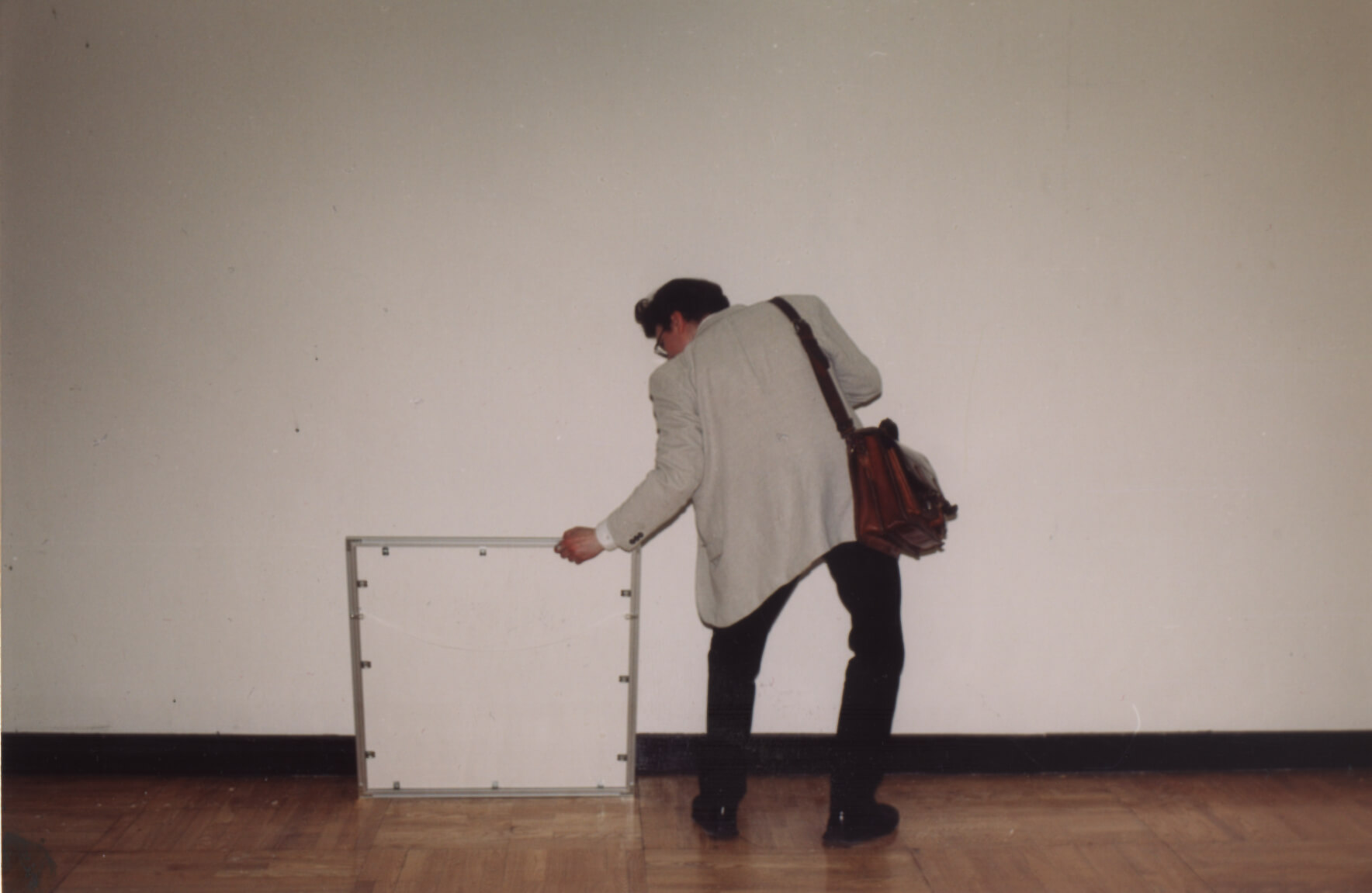
At the entrance to the fair, an exhibition of private collections featured one of Yury Albert’s works. I discreetly cut the ropes and relocated the piece to our own display, positioning it so that the back faced outward. This action was performed swiftly and quietly. When the public noticed the absence of the work, a commotion ensued. Several individuals pointed at me, claiming I had been near the display and accused me, exclaiming, ‘You’ve stolen the work!’ I responded, ‘No, I haven’t stolen it, it’s here,’ and indicated its new location. The work was subsequently found and rehung. The situation was rather amusing, particularly as its disappearance was even announced over the PA system. A candid photograph from the performance captures the critic Panov quietly moving the work away from the wall to examine the picture.
The exhibition concept involved not only displaying artifacts but also staging a series of performances. The intention was to make these performances so intense, through the lookalikes, the painting, the charcoal, and other elements, that everyone around would begin to perceive unusual events as performances. The strategy proved effective, as word spread and participants began to observe the fair’s events more closely. In everyday life, numerous coincidences, events, conflicts, and encounters occur. By shifting one’s perspective, it becomes possible to perceive performances and intentional acts in ordinary situations. This introduces a sense of artificial paranoia, understood here in a playful manner. Non-spectacular art, in terms of its political significance, seeks to give viewers a perspective that encourages deeper, more serious engagement with daily life, fostering greater appreciation, immersion, and understanding of each moment.
Anatoly Osmolovsky